
Key Takeaways For Table Runner
- Size Matters: Aim for a 6 to 10-inch overhang on each side of the table.
- Shape Counts: Different table shapes require different runner lengths.
- Go Custom: Extra-long tables may need custom-sized runners.
- Fabric Choices: Material affects both look and function.
- Occasion: Casual or formal settings influence runner style.
When it comes to table settings, size really does matter. The length and width of your table runner can significantly influence the overall ambiance and functionality of your dining space.
Visually, the table runner serves as a focal point, drawing the eye along its length and creating a sense of balance among all the table elements.
If your table runner is too short, it may seem disconnected from the table, almost like an island amidst a sea of tableware.
On the other hand, an overly long table runner can overwhelm the table and become a hindrance, catching on chairs or even tripping guests.
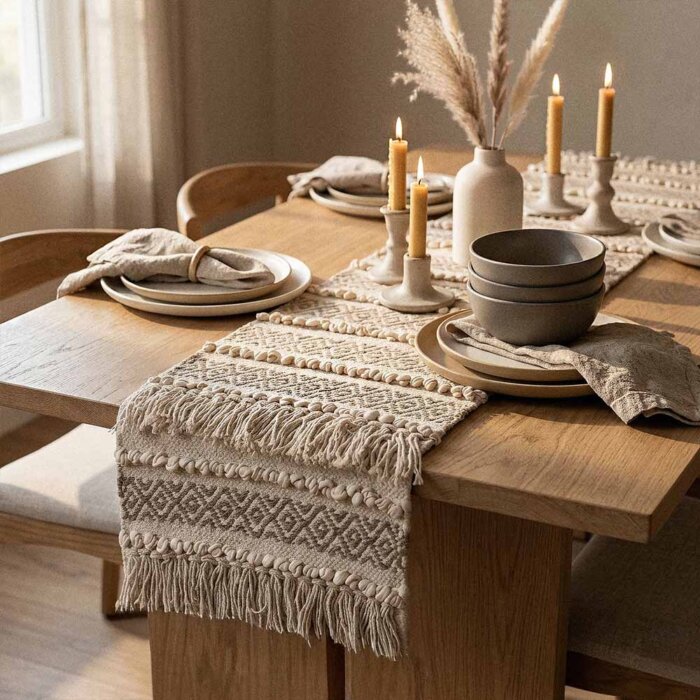
Now, let’s talk rules—or rather, guidelines. The general rule of thumb is that a table runner should hang down about 6 to 10 inches on each side of the table.
This allows the runner to be long enough to make a statement without being so long that it becomes impractical.
Whether you’re leaning toward the shorter end for a more casual vibe or the longer end for added drama, this rule offers enough flexibility to cater to different tastes and occasions.
Remember, these are guidelines, not commandments. The most important thing is that the table runner complements your table and enhances your setting, rather than detracting from it.
However, adhering to this general rule is a good starting point for those uncertain about what table runner size to choose.
Also Read >> Are Tablecloths Out of Style
Different Types of Tables and Their Sizes
Brief overview of common table shapes: rectangular, square, round, and oval.
| Table Shape | Average Length | Average Width |
|---|---|---|
| Rectangular | 72 inches | 36 inches |
| Square | 36 inches | 36 inches |
| Round | N/A | 48 inches |
| Oval | 72 inches | 48 inches |
Shop Our Table Runners


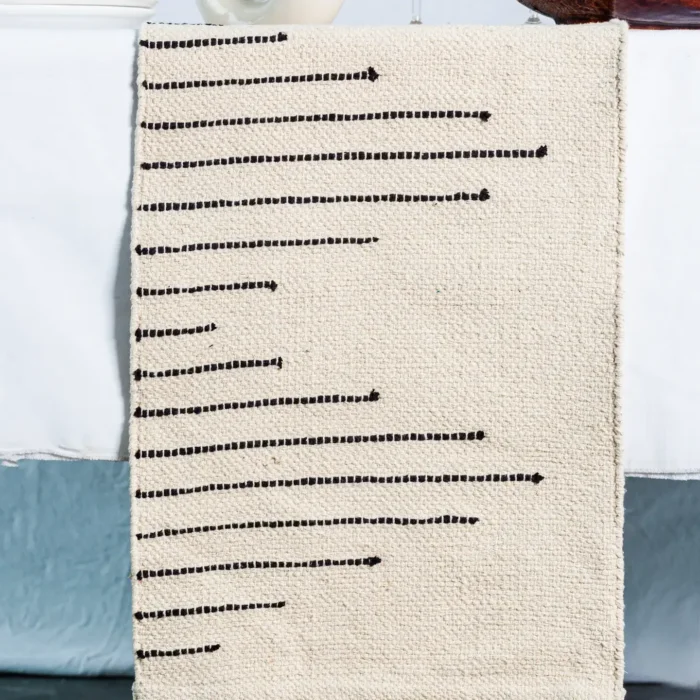
How to Measure a Table Runner
Tables come in various shapes, and each has its own unique charm and functional advantages. Understanding these basic forms is essential when choosing the right table runner. Here’s a quick rundown of the most common table shapes:
Rectangular Tables
The most widespread table shape, often seen in both homes and restaurants. Rectangular tables are incredibly versatile and are excellent for seating many people, particularly in long, narrow dining spaces.

Table Runners for Rectangular Tables
The runner for a rectangular table usually goes lengthwise, serving as a visual and functional centerpiece. You can also use two or more shorter runners width-wise if you want to divide the table into sections, which is particularly useful for buffet setups.
General Guidelines:
- Single Runner: Place one runner along the length of the table, allowing for a 6 to 10-inch overhang on both ends.
- Multiple Runners: If using more than one runner width-wise, make sure they are evenly spaced.
Practical Example:
I had a 72-inch rectangular table that often served as the gathering spot for family dinners. For everyday use, I preferred a single 88-inch runner that provided an 8-inch overhang on each side. It was both practical and stylish. For holidays like Thanksgiving, when the table is laden with various dishes, I switched to three shorter runners placed width-wise to help designate areas for appetizers, main courses, and desserts.
Tablecloths for Rectangular Tables
When it comes to rectangular tables, tablecloths generally drape over the corners, and the length of the overhang can vary depending on the occasion.
General Guidelines:
- Casual Setting: An overhang of 12 to 20 inches is usually sufficient.
- Formal Setting: For a luxurious drape that nearly touches the ground, go for an overhang of about 30 inches.
Practical Example:
For casual family dinners, I use a tablecloth with a 15-inch overhang, which hits just at the right spot, a few inches above the chairs. However, for more formal events, like an anniversary dinner, I opt for a floor-length tablecloth that adds an air of elegance to the setting.
Square Tables
Equal in length and width, square tables create a sense of balance and symmetry. They’re great for smaller dining areas and offer an intimate dining experience, as everyone sits an equal distance apart.

Table Runners for Square Tables
Square tables offer a sense of symmetry and balance. You can use a single table runner across the middle or go for an X-pattern, just like with round tables.
Example:
I have a small 36-inch square table in my kitchen. A single 52-inch runner across the middle works like a charm for daily meals, providing a clean, simple look.
You Might Also Like>> 10 Stunning Table Runner Ideas to Wow Your Guests!
Tablecloths for Square Tables
Square tables are perhaps the easiest to fit with a tablecloth. Measure one side and add your desired overhang—usually 12 to 20 inches for casual settings and up to 60 inches for formal occasions.
Example:
For a dinner party, I used a square tablecloth with a 20-inch overhang on my square table. It provided enough fabric to create a luxurious drape without interfering with the guests’ comfort.
Round Tables
These tables are perfect for fostering conversation, as everyone faces the center. Round tables lack corners, making them ideal for smaller spaces where you want to maximize seating. They also add a softer, more organic feel to a room.

Table Runners for Round Tables
Round tables present a unique design opportunity when it comes to table runners. Unlike rectangular or square tables where the runner typically goes lengthwise, you have two main options for a round table:
- Single Runner: Lay the runner across the diameter of the table, dividing it into two halves. This is especially useful if you have a centerpiece that you want to highlight.
- X-Pattern: Use two table runners to create an “X” across the table. This design allows more room for place settings and offers a balanced look.
Practical Example:
For my daughter’s garden party, we had a round table and I opted for the X-pattern. It allowed space for the cake at the center and individual cupcake settings at each quadrant. The runners were about 8 inches longer than the table’s diameter, giving a nice drape without overwhelming the setup.
Tablecloths for Round Tables
Selecting a tablecloth for a round table is a straightforward process, but you can also get creative:
- Round Tablecloth: The classic choice. Measure the diameter and add 12 to 20 inches for casual settings, or up to 60 inches for a formal, floor-length drop.
- Square Tablecloth: Yes, you can use a square tablecloth on a round table. Just make sure the diagonal length of the square is at least 12 to 20 inches longer than the diameter of the table.
Example:
For a casual outdoor BBQ, I used a round tablecloth with just a 12-inch overhang. It was functional and easy to manage, especially with kids running around.
Oval Tables
A blend of rectangular and round tables, oval tables offer the best of both worlds. They can accommodate more people thanks to their elongated shape but still provide the communal feel of a round table. The rounded edges also make it easier to move around.

Table Runners for Oval Tables
Oval tables are a bit tricky because of their rounded edges. The length of a runner for an oval table generally follows the rules for rectangular tables, but account for the curves.
Example:
My oval dining table is about 72 inches long. I chose a table runner that was 88 inches long, allowing for an 8-inch overhang on each end. This length perfectly complemented the table’s curves without looking excessive.
Tablecloths for Oval Tables
For an oval table, you can opt for either a rectangular or an oval tablecloth. If you go for a rectangular one, ensure it’s not too wide that it bunches at the curves.
Example:
During Thanksgiving, I used a rectangular tablecloth with a 15-inch overhang on my oval table. It gracefully touched the floor, adding to the formal setting of the occasion.
Each of these table shapes has its own set of considerations when it comes to selecting a table runner. The runner’s length and width should not only suit the table’s dimensions but also complement its shape to create a cohesive and inviting table setting.
Also>> Tea Towel vs. Dish Towel: The 4 Must-Knows!
Specific Table Runner Lengths for Common Table Sizes
How Long Should a Table Runner Be for a 72-Inch Table?
When you’re dealing with a 72-inch table, which is the same as a 6-foot table, you’ll want to aim for a table runner that hangs down about 6 to 10 inches on either side. Therefore, for a 72-inch table, your table runner should ideally be between 84 and 92 inches long.
General Guidelines:
- Casual Setting: An 84 to 88-inch runner works well. It provides a sufficient drop without being too formal.
- Formal Setting: Opt for a 90 to 92-inch runner to create a more luxurious feel.
Personalized Tips:
For my own 72-inch table, I use an 88-inch runner for everyday meals. It’s long enough to add elegance but short enough to be practical. When I’m hosting more formal events, I switch to a 92-inch runner to amp up the drama.
How Long Should a Table Runner Be for a 60-Inch Table?
A 60-inch table, which is the same as a 5-foot table, also follows the 6 to 10-inch overhang rule. In this case, the runner should be between 72 and 80 inches long.
Ideal Dimensions:
- Casual Setting: A 72 to 76-inch runner is typically sufficient.
- Formal Setting: A 78 to 80-inch runner gives a more polished look.
Expert Advice:
For a 60-inch table, a 76-inch runner will do. It’s the perfect length for casual dinners and brunches. For special occasions, Opt for an 80-inch runner to add that extra touch of sophistication.
How Long Should a Table Runner Be for an 84-Inch Table?
When you’re working with an 84-inch table, you’re in the territory of longer tables. Here, you still want to aim for a runner that has a 6 to 10-inch overhang on both ends. This would mean selecting a runner that is between 96 and 104 inches long.
Guidelines for a Longer Table:
- Casual Setting: A 96 to 100-inch runner maintains a relaxed atmosphere while accounting for the table’s length.
- Formal Setting: A 102 to 104-inch runner adds an elegant touch suitable for special occasions.
How Long Should a Table Runner Be for a 78-Inch Table?
For a 78-inch table, your table runner should ideally be between 90 and 98 inches long, adhering to the 6 to 10-inch overhang guideline.
Best Practices for This Specific Length:
- Casual Setting: A 90 to 94-inch runner works well.
- Formal Setting: Opt for a 96 to 98-inch runner for a more polished look.

How Long Should a Table Runner Be for a 90-Inch Table?
For a 90-inch table, you’ll want to find a table runner that’s between 102 and 110 inches long.
Recommended Lengths:
- Casual Setting: A 102 to 106-inch runner is suitable.
- Formal Setting: A 108 to 110-inch runner will elevate the table’s appearance.
How Long Should a Table Runner Be for a 5-Foot Table?
A 5-foot table is the same as a 60-inch table, and for this size, a table runner between 72 and 80 inches long would be ideal.
Insights for a 5-Foot Table:
- Casual Setting: A 72 to 76-inch runner is typically sufficient for daily use.
- Formal Setting: A 78 to 80-inch runner adds a touch of formality for special occasions.
How Long Should a Runner Be on a 120-Inch Table?
For a grand table that spans 120 inches, you’re looking at a different set of considerations. The standard 6 to 10-inch overhang rule would suggest a table runner length of between 132 and 140 inches. However, it might be challenging to find ready-made runners of that length in most stores.
The Need for Custom Lengths:
Given the exceptional length of a 120-inch table, you might need to explore custom-made options. Specialty linen stores or online shops often offer customization services where you can specify the exact dimensions you need.
Practical Insights:
For formal settings, I’d recommend going for the maximum 10-inch overhang, resulting in a 140-inch runner.
It creates an opulent and balanced look that matches the grandeur of a table of this size. If such a length isn’t readily available, custom-ordering would be the way to go.
For more casual settings, a 132-inch runner (6-inch overhang on each side) could be more practical, making sure it’s long enough to create a visual impact but not too long to become cumbersome.
A 120-inch table is an impressive piece of furniture, and it deserves a runner that can match its grandiosity.
While you may need to go the custom route to get the perfect length, the extra effort will pay off when you see how a well-fitted runner enhances the beauty and function of your large table.
You Might Also Like>> Decoding Bed Sheet Care: When and How Often to Wash Your Sheets?
Tips for Choosing the Right Table Runner
Choosing the right table runner isn’t just about the size; the fabric type also plays a crucial role. Here are some insights into different fabric options and other practical considerations:
Fabric Types:
- Cotton: Great for everyday use, easy to wash, and offers a casual look.
- Linen: Provides a classic, elegant appearance but may require ironing.
- Silk and Satin: Ideal for formal settings; however, they require delicate handling.
- Synthetic Blends: Practical and often stain-resistant, but may not offer the same aesthetic appeal as natural fibers.
- Burlap and Jute: For a rustic or boho-chic vibe, these materials are quite trendy but can be a bit rough to the touch.
Practical Tips:
- Match or Contrast: Either match the runner to your existing tablecloth or choose a contrasting color to make it pop.
- Test for Stains: Especially if you opt for lighter colors, test how easily the fabric stains and how simple it is to clean.
- Check for Shrinkage: Some fabrics, like cotton, may shrink upon washing. Always check the care label and perhaps buy a slightly longer runner to account for potential shrinkage.
Comprehensive Table Runner Size Chart for Various Shapes
Below is an all-encompassing chart that provides recommended runner lengths for different table shapes—rectangular, oval, round, and square. The chart includes guidelines for both casual and formal settings.
| Shape | Table Length (inches) | Recommended Runner Length (inches) | Casual Setting (inches) | Formal Setting (inches) |
|---|---|---|---|---|
| Rectangular | 60 | 70 | 72 | 80 |
| Rectangular | 72 | 82 | 84 | 92 |
| Rectangular | 78 | 88 | 90 | 98 |
| Rectangular | 84 | 94 | 96 | 104 |
| Rectangular | 90 | 100 | 102 | 110 |
| Rectangular | 120 | 130 | 132 | 140 |
| Oval | 60 | 70 | 72 | 80 |
| Oval | 72 | 82 | 84 | 92 |
| Oval | 78 | 88 | 90 | 98 |
| Oval | 84 | 94 | 96 | 104 |
| Oval | 90 | 100 | 102 | 110 |
| Oval | 120 | 130 | 132 | 140 |
| Round | 60 | 70 | 72 | 80 |
| Round | 72 | 82 | 84 | 92 |
| Round | 78 | 88 | 90 | 98 |
| Round | 84 | 94 | 96 | 104 |
| Round | 90 | 100 | 102 | 110 |
| Round | 120 | 130 | 132 | 140 |
| Square | 60 | 70 | 72 | 80 |
| Square | 72 | 82 | 84 | 92 |
| Square | 78 | 88 | 90 | 98 |
| Square | 84 | 94 | 96 | 104 |
| Square | 90 | 100 | 102 | 110 |
| Square | 120 | 130 | 132 | 140 |
Conclusion
Table runners are an essential part of table setting aesthetics. They not only add a decorative flair but also contribute to defining the dining experience, whether casual or formal.
The right size, hanging down 6 to 10 inches on either side of the table, can make a significant difference.
While the shape of your table—be it rectangular, square, round, oval, or even an impressive 120 inches—plays into your choice, the fabric type and your personal taste are equally important.
Remember, these are guidelines designed to set you on the right path. Feel free to adapt them to better suit your individual needs and taste preferences.
After all, the table is yours to decorate, so make it a reflection of your style.