Are you eager to create a healthy, sustainable kitchen environment? It all begins with the dishes gracing your table – the vessels holding the nourishing meals that fuel your family.
This comprehensive guide will take you through the world of safest dishes to use at home while arming you with the knowledge to make informed choices that prioritize well-being.
Lead and Heavy Metal Dangers
The presence of lead and other heavy metals in some dinnerware can leach into your food, potentially causing severe health issues. That’s why it is important to buy lead-free dinnerware from trusted sources.
Safety Labels and Testing
Learn to understand the language of safety labels and certifications, such as FDA-approved and BPA-free, which indicate a product’s safety.
For doubts, especially regarding vintage or handmade pieces, consider using a lead or cadmium test kit.
Home Test Kit Instructions:
- Preparation: Clean and dry the dish surface.
- Activation: Follow the kit’s instructions to activate the swab or testing solution.
- Application: Apply the solution, focusing on any damage.
- Results: Compare the test result to the color chart provided.

Lead-Free Dinnerware Sets
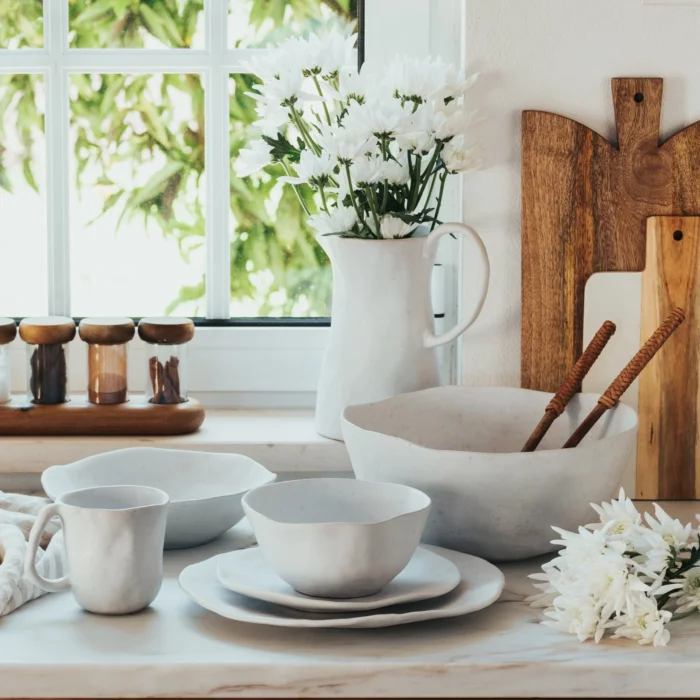
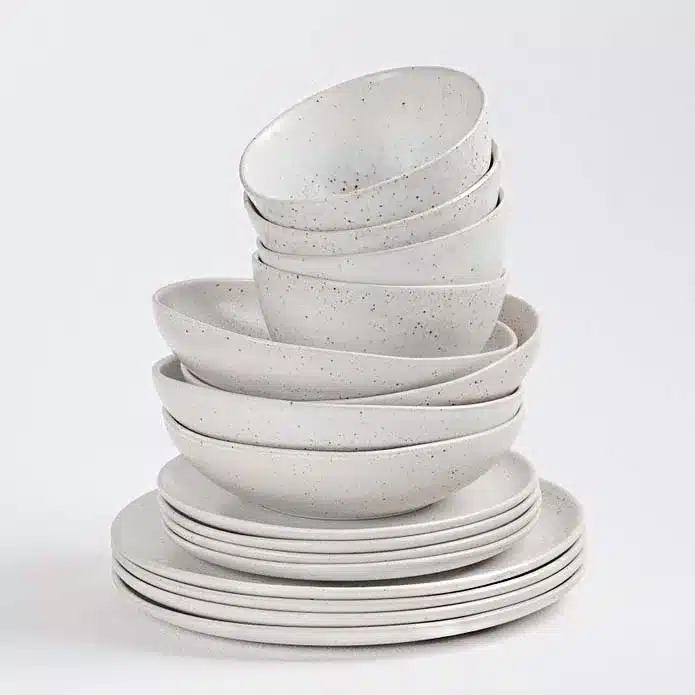
Ceramic Dinnerware

Porcelain
- Made from high-temperature fired mineral clay and sand.
- Key Advantages: Durable, chip-resistant, and versatile in design.
Ceramic
- Fired at slightly lower temperatures and then glazed.
- Key Benefits: Strong, durable, and wide-ranging design options.
Stoneware
- Includes extra glass material and is fired at high temperatures.
- Key Strengths: Moisture-resistant, suitable for baking, and unique finishes.
Also Read>> How to Care For Ceramic Tableware
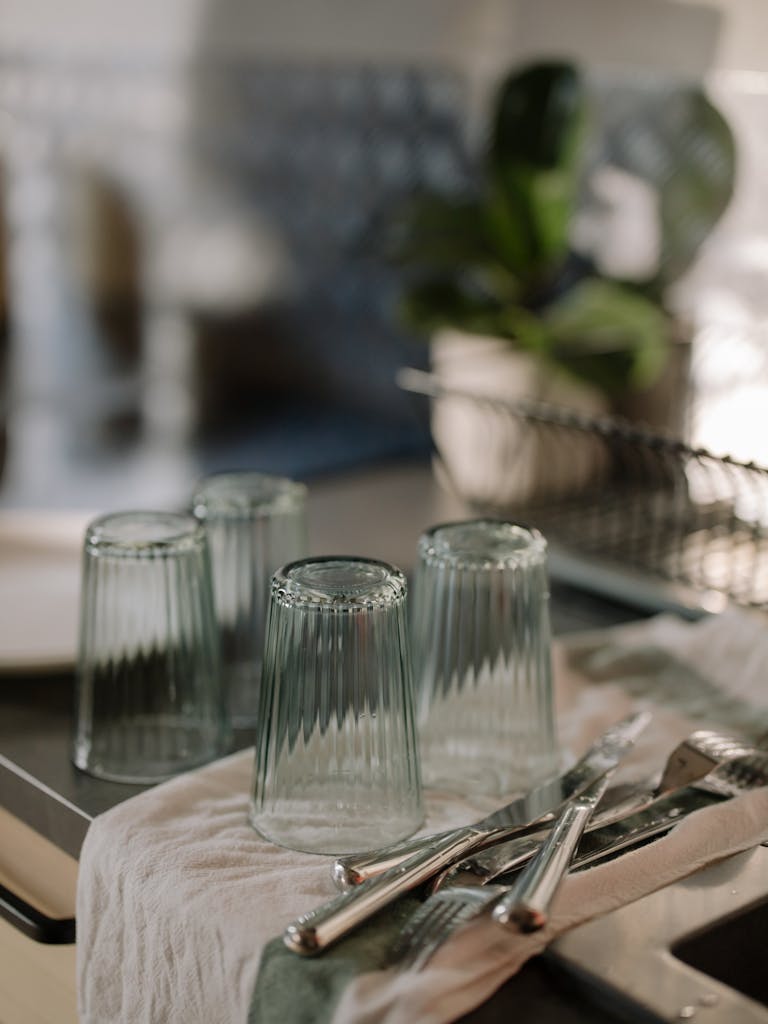
Glass Dishes

Chemical Stability:
- Glass, particularly from reputable brands like Pyrex, is celebrated for its chemical inertness, meaning it won’t react with the food it holds. This ensures that flavors remain pure and uncontaminated by the materials of the dishware.
Heat Resistance:
- Many glass dishes are designed to withstand high temperatures without warping or breaking, making them ideal for baking and serving hot foods directly from the oven to the table.
Transparency for Easy Monitoring:
- The clear nature of glass allows for the visual monitoring of food, both during cooking and serving, adding convenience and an aesthetic appeal.
Longevity and Sustainability:
- Glass is highly durable and can last for decades if properly cared for, making it a sustainable choice for the environment. It does not degrade over time and can be recycled infinitely without loss of quality.
Considerations for Glass Dishware
Painted and Decorated Glass:
- While clear glass is generally safe, glassware with painted designs or decorations may pose a risk if they contain harmful substances like lead or cadmium, particularly in items not intended for food use or lower-quality imports.
Handling and Care:
- Despite its heat resistance, glass can be susceptible to thermal shock if subjected to sudden temperature changes. It’s important to avoid moving glassware from one extreme temperature to another abruptly.
- Glass can chip or break if dropped or knocked, potentially creating sharp hazards. Proper handling and storage can minimize these risks.
Choose Safe Glass Dishes
Select Reputable Brands:
- Opting for dishes from reputable brands ensures the glass is manufactured to high safety and quality standards. Brands like Pyrex are known for their durable, heat-resistant glassware that’s safe for cooking and serving.
Check for Safety Certifications:
- Look for glassware that explicitly states it is food-safe and free from harmful chemicals. Certifications and manufacturer statements can often be found on packaging or company websites.
Avoid Risky Decorations:
- For glass dishes with decorations or colored glass, ensure they are labeled as food-safe. When in doubt, use these pieces for decorative purposes rather than serving food.

Stainless Steel
Durability and Non-Reactivity:
- Stainless steel is highly durable, resisting rust and corrosion.
- It does not react with acidic foods or impart a metallic taste, making it suitable for a variety of culinary uses.
Ease of Cleaning and Maintenance:
- Capable of withstanding high temperatures, stainless steel is generally dishwasher-safe.
- Its ease of cleaning ensures a hygienic kitchen environment.
Considerations for Nickel Sensitivity
Nickel in Stainless Steel:
- Some stainless steel alloys include nickel to improve durability and corrosion resistance.
- Nickel can cause dermatological reactions in some individuals and, though rare, dietary reactions.
Alternatives for Sensitive Individuals:
- “Nickel-free” stainless steel products are available for those with sensitivities, maintaining the benefits of stainless steel without the risk of allergic reactions.
- Ceramic-coated cookware is an alternative that combines metal’s durability with a non-reactive ceramic surface.
Bamboo and Plant Plastics

When considering the safest dishes for daily use, bamboo and plant-based plastics stand out for their eco-friendly and non-toxic qualities.
Bamboo dishes, derived from a sustainable and rapidly renewable resource, offer a durable and lightweight option that naturally resists bacteria.
To ensure the utmost safety, it’s important to select bamboo dinnerware that avoids harmful chemicals and synthetic binders, making them a safe choice for your table.
On the other hand, plant-based plastics, made from renewable materials like corn starch and sugarcane, present an innovative alternative to traditional petroleum-based plastics.
These biodegradable materials are designed for a lower environmental impact and can be safer for use, provided they are not exposed to high temperatures which could affect their structural integrity.
When using plant-based plastics, it’s vital to adhere to the manufacturer’s recommendations on dishwasher and microwave use to prevent warping or degradation.
Maintain Your Safe Dishes to use them for longer
Tips for Longevity:
- Ceramic/Porcelain/Stoneware: Use gentle cleaning methods and avoid abrasives.
- Glass: Handle with care and use non-abrasive cleaners.
- Stainless Steel: Opt for gentle cleaners and dry thoroughly.
- Bamboo: Hand wash and avoid prolonged soaking.
Real-World Examples
- Tracey’s Story: A wake-up call prompted a switch to a new, safe ceramic set.
- The Johnsons’ Journey: Inherited vintage china set used for display, not for meals.
Also Read>>
FAQ: safest dishes to use
Which is safer stoneware or ceramic?
Stoneware is often deemed safer than basic ceramic for dinnerware due to its higher firing temperature, which makes it more durable, less porous, and better at resisting moisture and bacteria.
This higher durability means it’s less likely to crack or chip, reducing places where bacteria can grow, thereby making it a safer choice for everyday use.
Does stoneware leach chemicals?
Yes, some lower-quality stoneware that isn’t made from food-safe materials might contain harmful substances, including lead and cadmium.
These chemicals can leach into food, especially if the stoneware is damaged or cracked, posing significant health hazards upon ingestion.