Have you ever felt overwhelmed by the constant chatter of your mind? Do you long for a sense of inner peace and clarity? If so, you’re not alone. In today’s fast-paced world, many people are turning to meditation for solace. One particularly powerful form of meditation is Zazen, the cornerstone of Zen Buddhism. In this comprehensive guide, we’ll explore the depths of Zazen practice and how it can transform your life.
What is Zazen?
Zazen is the core of Zen Buddhism, a spiritual tradition that originated in China and later spread to Japan and the West. In simple terms, it’s a way of sitting in meditation. But it’s so much more than just sitting still.
Zazen is about becoming fully aware of your present moment experience, a concept closely related to mindfulness in Western psychology.
The word “Zazen” comes from Japanese:
- “Za” means sitting
- “Zen” refers to meditation
So, Zazen literally means “seated meditation.” But don’t let the simplicity fool you – this practice can be deeply transformative!
Zazen is often compared to other forms of meditation such as Vipassana (insight meditation) or Transcendental Meditation. While these practices share some similarities, Zazen has its unique characteristics and approach.
The Philosophy Behind Zazen
To truly understand Zazen, we need to get into the philosophy that underpins it. Zen Buddhism, from which Zazen originates, emphasizes direct experience over intellectual understanding. This aligns with the concept of experiential learning in modern psychology.
Key philosophical principles of Zazen include:
- Non-dualism: The idea that subject and object, self and other, are not separate but interconnected.
- Emptiness (Sunyata): Not nihilism, but the understanding that all phenomena are empty of inherent existence.
- Buddha-nature: The belief that all beings have the potential for awakening.
- Direct pointing: Emphasis on direct experience rather than conceptual understanding.
These concepts might sound abstract, but through Zazen practice, they become lived experiences rather than mere intellectual ideas.
The Goals of Zazen
Unlike some other forms of meditation, Zazen isn’t about achieving a specific state of mind or reaching a particular goal. Instead, it focuses on:
- Being fully present in the here and now
- Observing your thoughts without judgment or attachment
- Developing concentration (Samadhi) and awareness
- Gaining insight (Prajna) into your true nature
- Cultivating equanimity in the face of life’s ups and downs
Zazen is about seeing the sky (your mind) clearly, without getting caught up in the clouds (your thoughts). It’s a practice of radical acceptance of what is, moment by moment.
How to Practice Zazen
Ready to give it a try? Here’s a detailed, step-by-step guide to get you started with Zazen:
1. Find a Quiet Space
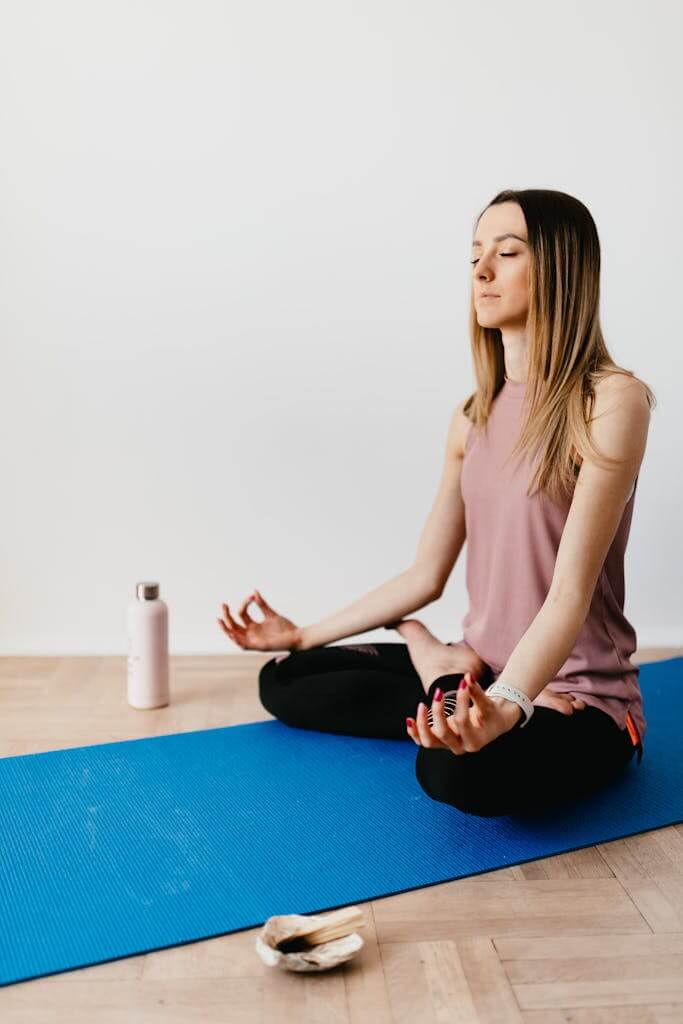
Choose a calm area where you won’t be disturbed. You don’t need a fancy meditation room – a corner of your bedroom and a yoga mat work just fine! The key is consistency. In Zen, this space is called the ‘Dojo’ or ‘place of the way’.
2. Set Up Your Seat
You can sit on a cushion (called a zafu) or a chair. The important thing is to keep your back straight and your body stable. Traditional Zen practice often uses a zafu placed on a larger, flat cushion called a zabuton.
3. Position Your Body
- If on a cushion: Sit cross-legged, with one foot resting on the opposite thigh (full or half lotus position). If this is too difficult, you can also sit in Burmese position or simple cross-legged position.
- If on a chair: Sit with both feet flat on the floor.
- Keep your back straight but not stiff. Imagine your spine as a stack of coins, each aligned perfectly.
- Tuck your chin slightly and relax your shoulders.
- Your ears should be in line with your shoulders, and your nose in line with your navel.
4. Position Your Hands
- Rest your hands in your lap.
- Place your right hand on top of your left, palms facing up.
- Touch your thumbs together lightly, forming an oval shape. This is called the ‘cosmic mudra’ in Zen tradition.
5. Set Your Gaze
- Keep your eyes half-open, looking downward at about a 45-degree angle.
- You’re not focusing on anything specific – just maintaining a soft gaze.
- This helps maintain a balance between concentration and relaxation.
6. Breathe Naturally
- Don’t try to control your breath. Simply observe your natural breathing.
- Some people count their breaths (1 to 10, then start over) to help stay focused.
- In Zen, this is sometimes called ‘following the breath’ or ‘becoming one with the breath’.
7. Just Sit
- This is the heart of Zazen – just sitting and being aware.
- When thoughts come (and they will!), gently acknowledge them and let them go.
- Keep bringing your attention back to your breath and the present moment.
- This state of alert presence is sometimes referred to as ‘Shikantaza’ or ‘just sitting’ in Zen terminology.
Types of Zazen
While Zazen is often thought of as a single practice, there are actually several different approaches or types of Zazen. Each type has its own focus and benefits, and practitioners may use different types at different stages of their journey or depending on their specific goals.
1. Susokukan (Counting Breaths)
Susokukan is often recommended for beginners. In this practice:
- You focus on your breath, counting each inhalation and exhalation.
- Typically, you count from one to ten, then start over.
- If you lose count or your mind wanders, simply start again at one.
This type of Zazen helps develop concentration and is an excellent way to calm a busy mind.
2. Shikantaza (Just Sitting)
Shikantaza is considered the most advanced form of Zazen. It involves:
- Sitting without any specific focus or technique.
- Maintaining open awareness of whatever arises in your experience.
- Not attaching to or rejecting any thoughts, feelings, or sensations.
Shikantaza embodies the essence of Zen’s non-dual approach, cultivating a state of alert presence without fixation on any particular object.
3. Koan Introspection
As mentioned earlier, some Zen traditions use koans as a focus for Zazen. In this practice:
- The practitioner contemplates a koan given by their teacher.
- The aim is not to solve the koan intellectually, but to penetrate its meaning intuitively.
- This can lead to sudden insights or awakenings (kensho or satori).
Koan practice is typically done under the guidance of an experienced Zen teacher.
4. Bukko-za (Wall-Gazing)
This type of Zazen is attributed to Bodhidharma, the founder of Zen. It involves:
- Sitting facing a wall, about a meter away.
- Keeping the eyes open with a soft gaze.
- Allowing thoughts to arise and pass without engagement.
Bukko-za can be particularly helpful for practitioners who tend to get drowsy during meditation.
5. Mokugyō Zazen (Wooden Fish Zazen)
This is a form of group Zazen often practiced in monasteries. It involves:
- Sitting in the standard Zazen posture.
- Focusing on the rhythmic sound of a wooden percussion instrument called a mokugyō.
- Using the sound as an anchor for attention, similar to focusing on the breath.
This practice can help develop concentration and group cohesion in a communal setting.
6. Bompu Zen
Bompu Zen, or “ordinary Zen,” is a secular approach to Zazen that focuses on its health and well-being benefits rather than spiritual enlightenment. It’s similar to mindfulness meditation and can be practiced by anyone, regardless of their spiritual beliefs.
The Role of Koans in Zazen
In some Zen traditions, practitioners use koans during Zazen. Koans are paradoxical questions or statements designed to provoke “great doubt” and test a student’s progress in Zen practice. Famous koans include:
- “What is the sound of one hand clapping?”
- “What was your original face before your parents were born?”
Working with koans is a specialized practice usually done under the guidance of a qualified Zen teacher.
Zazen and Modern Neuroscience
Recent neuroscientific research has shed light on the effects of meditation practices like Zazen on the brain. Studies have shown that regular meditation can lead to:
- Increased gray matter density in areas associated with learning, memory, and emotion regulation
- Reduced activity in the Default Mode Network, associated with mind-wandering and self-referential thoughts
- Enhanced connectivity between brain regions, leading to improved cognitive function
These findings provide scientific support for the benefits that Zen practitioners have reported for centuries.
Integrating Zazen into Daily Life
The ultimate goal of Zazen is not just to have a peaceful experience on the cushion, but to bring that same quality of awareness into every moment of your life. This is sometimes called “walking Zazen” or “Zen in action.”
Here are some ways to integrate Zazen principles into your daily life:
- Mindful Eating: Pay full attention to the experience of eating. Notice the flavors, textures, and sensations.
- Walking Meditation: Bring your Zazen awareness to the simple act of walking. Feel each step, the movement of your body, the air on your skin.
- Mindful Work: Approach your tasks with full attention, one at a time. This is in line with the Zen saying, “When walking, walk. When eating, eat.”
- Pausing: Take brief moments throughout the day to pause, breathe, and reconnect with your present moment experience.
- Beginner’s Mind: Approach situations with openness and curiosity, as if experiencing them for the first time.
By practicing these principles, you can turn your entire life into a meditation, bringing the benefits of Zazen into every moment.
Common Challenges in Zazen Practice
While Zazen can be profoundly beneficial, it’s not without its challenges. Here are some common difficulties practitioners face and how to address them:
- Physical Discomfort: Sitting still for long periods can be uncomfortable. Start with short sessions and gradually increase duration. Also, ensure your posture is correct.
- Mental Restlessness: It’s normal for the mind to wander. Gently but firmly bring your attention back to your breath each time you notice it wandering.
- Sleepiness: If you find yourself getting drowsy, try opening your eyes wider or sitting up straighter. You can also try practicing at a different time of day when you’re more alert.
- Expectations: Many people expect to feel peaceful or achieve some special state. Remember, the goal of Zazen is not to achieve any particular state, but to be present with whatever arises.
- Lack of Time: In our busy lives, finding time for practice can be challenging. Start with just 5-10 minutes a day and gradually increase. Consistency is more important than duration.
The Zen Tradition and Zazen
While Zazen can be practiced independently, it’s traditionally taught within the context of Zen Buddhism. In a Zen monastery or center (called a ‘Zendo’), Zazen is usually practiced in groups, often for long periods.
Key elements of traditional Zen practice include:
- Sesshin: Intensive meditation retreats lasting several days to weeks.
- Kinhin: Walking meditation practiced between periods of seated Zazen.
- Dokusan: Private meetings with a Zen teacher to discuss one’s practice.
- Samu: Work practice, bringing the mindfulness of Zazen into everyday tasks.
While these elements can deepen one’s practice, they’re not necessary to start experiencing the benefits of Zazen.
Zazen and Stress Reduction
In our high-stress world, many people turn to Zazen as a way to find calm and balance. The practice of Zazen shares many similarities with Mindfulness-Based Stress Reduction (MBSR), a clinically proven method for reducing stress and improving overall well-being.
By cultivating present-moment awareness and non-judgmental acceptance, Zazen can help reduce the physiological and psychological effects of stress.
This includes lowering cortisol levels, reducing anxiety and depression symptoms, and improving sleep quality.
Zazen might seem simple on the surface, but it’s a profound practice that has transformed lives for centuries. By simply sitting and being present, you open the door to a deeper understanding of yourself and the world around you.
Whether you’re interested in Zen Buddhism, looking for a way to reduce stress, or seeking a path to greater self-awareness, giving Zazen a try could be the start of an amazing journey. Remember, the most important step is to begin. So why not find a quiet spot and start your Zazen practice today?