
The Bauhaus movement emerged as a pivotal force in early 20th-century design and architecture, thanks to architect Walter Gropius who established the eponymous German school. Running from 1917 to 1933, this movement uniquely blended art, crafts, and industry.
Walter Gropius founded an extraordinary art school in Weimar, Germany, in 1919, following World War I.
The Bauhaus school broke down the conventional barriers between craftsmen and artists by bringing them together in collaborative workshops.
This hands-on, cross-disciplinary method was unique for its time. Through the school’s foundational manifesto, Gropius imagined the Bauhaus as a cradle for a “total work of art” (Gesamtkunstwerk), aiming for a fusion of various art forms.
Even after the Nazis shut it down in 1933, with Mies van der Rohe as its last director, the spirit of Bauhaus lived on.
The movement’s principles spread worldwide, thanks to the efforts of key figures like Gropius and van der Rohe who left Germany.
These principles significantly influenced mid-20th-century modernism and continue to resonate today, even impacting the design of Apple products under Steve Jobs.
Key Characteristics of Bauhaus Design:
- Simplicity: The designs are known for their clean lines and lack of unnecessary decoration.
- Functionality: Each design element is purposeful, embracing the “form follows function” principle.
- Art and Technology Integration: Industrial materials are combined with artistic design in a seamless fashion.
- Geometric Forms: Basic shapes, such as squares, circles, and triangles, are used to craft visually appealing and practical spaces.
- Minimalist Color Palette: Neutral colors form the basis, with bold primary colors adding depth and emphasis.
Why “Bauhaus”?
The name “Bauhaus,” translating to “building house” in German, reflects Gropius’s aim to merge architectural design with art and craftsmanship.
This concept was at the heart of the Bauhaus movement, showcasing the synergy between building and artistic creation.
Bauhaus home decor Tips
Incorporating Bauhaus principles into your home decor can make your space a beacon of modernist design, where functionality meets sleek aesthetics.
Minimalism
- Simplify Your Color Scheme: Use a neutral base palette and add touches of primary colors (red, yellow, and blue) to create visual interest and depth without overwhelming the space.
- Declutter: Begin by clearing out clutter. The Bauhaus mantra “less is more” emphasizes the beauty of simplicity and function. Retain only what serves a purpose.
Choose Functional Furniture
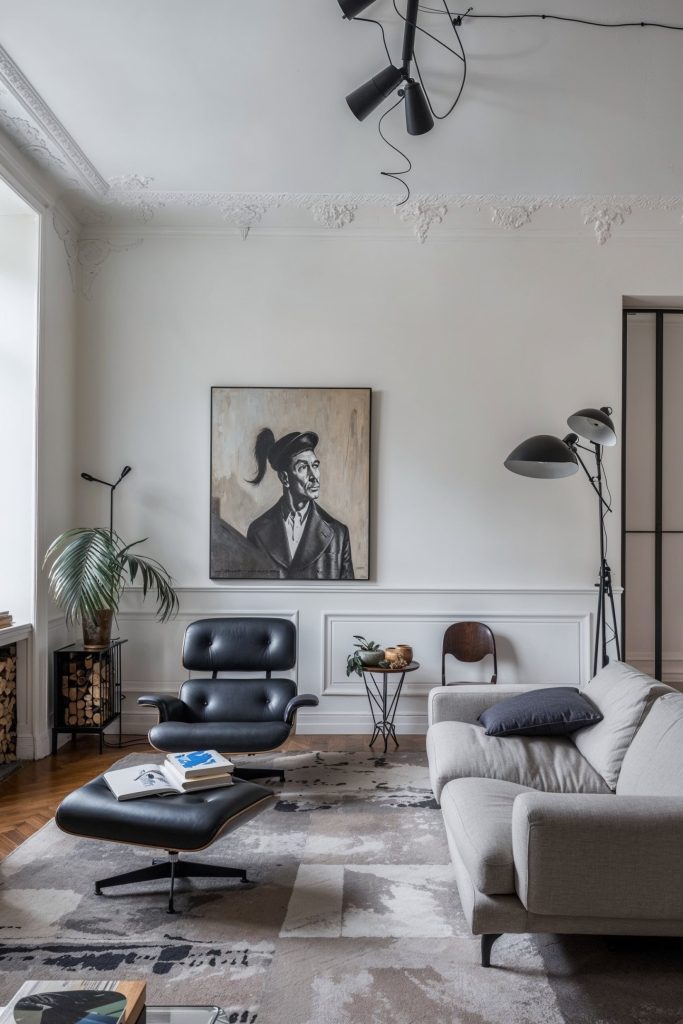
- Form Follows Function: Pick furniture that combines utility with elegance. Favor pieces with straightforward, geometric shapes and clean lines.
- Innovative Materials: Look for furniture and decor crafted from industrial materials like steel, glass, and plywood, reflecting the Bauhaus commitment to material innovation.
Incorporate Geometric Shapes
- Geometric Decor: Accentuate your space with items that feature geometric patterns or shapes, such as wall art, rugs, and cushions, to echo Bauhaus aesthetics.
- Architectural Elements: Incorporate Bauhaus architectural influences if possible, including flat roofs, glass curtain walls, or furniture made from tubular steel.
Focus on Lighting
- Functional Lighting: Opt for lighting fixtures that are both artistic and practical, often characterized by sleek, metallic finishes and geometric designs.
- Ambient and Task Lighting: Ensure your lighting setup includes ambient lighting for overall illumination and task lighting for specific activities.
Use Modern Materials
- Experiment with Texture: Blend textiles, metals, and glass to introduce texture and intrigue, staying true to the Bauhaus tradition of exploring new materials.
- Sustainable Choices: Whenever possible, opt for sustainable and eco-friendly alternatives to traditional Bauhaus materials, aligning with modern environmental values.
Art and Accessories
- Abstract Art: Adorn your walls with abstract, non-representational art that mirrors the Bauhaus’s lean towards simplicity and geometric configurations.
- Keep Accessories to a Minimum: Select a handful of well-designed accessories as focal points rather than filling surfaces with numerous decorative items.
Open Floor Plans
- Create Flow: Aim for an open floor plan that promotes uninterrupted movement between areas, embodying the Bauhaus preference for functional spaces and freedom of movement.

Examples of Bauhaus design



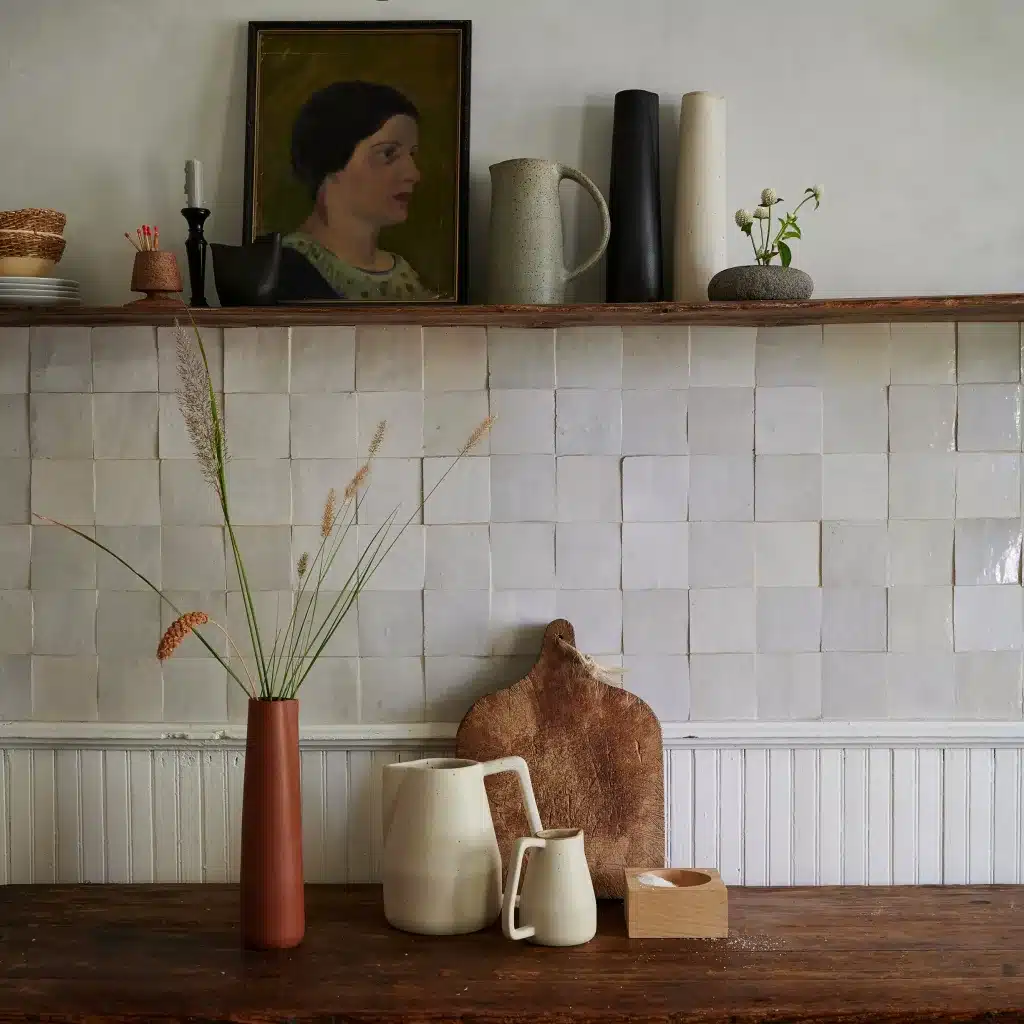
Bauhaus design has permeated many aspects of art, architecture, and home decor, offering a variety of examples that showcase its unique blend of functionality, simplicity, and elegance.
Below, I have collected some notable examples of Bauhaus design that have left a lasting impact:
Furniture
- Wassily Chair by Marcel Breuer: Created in 1925-1926, this chair stands as a testament to Bauhaus furniture design, featuring tubular steel and leather straps. It exemplifies functionality, minimalism, and the pioneering use of industrial materials.
- Barcelona Chair by Ludwig Mies van der Rohe and Lilly Reich: Crafted for the 1929 Barcelona Exposition, this chair merges luxury with simplicity through its sleek steel framework and elegant leather upholstery.
Buildings and Architecture
- The Bauhaus Building in Dessau, Germany: Walter Gropius’s design, finished in 1926, served as the Bauhaus school’s hub. It’s a key example of Bauhaus architecture, noted for its cubic shapes, flat roofs, and glass curtain walls.
- Villa Tugendhat by Ludwig Mies van der Rohe: Situated in Brno, Czech Republic, this villa is a masterpiece of modernist architecture. It highlights open spaces, functional design, and the harmonious blend of nature with architecture through expansive windows.
Typography and Graphic Design
- Bauhaus Typography: The Bauhaus’s unique typeface is known for its straightforwardness and legibility, featuring sans-serif fonts, geometric forms, and well-balanced layouts.
- Posters and Publications: Recognized for their use of primary colors, geometric shapes, and unbalanced compositions, Bauhaus graphic design produced eye-catching posters and publications that effectively communicated the institution’s events and ideologies.
Household Items and Interior Design
- Tea Infuser by Marianne Brandt: This tea infuser, along with its matching teapot, is celebrated for its geometric shape and practical design, highlighting the Bauhaus’s innovative approach to daily objects.
- Bauhaus Lamp by Wilhelm Wagenfeld: Crafted in 1924, this lamp is a prime example of the Bauhaus’s blend of art, industry, and technology. Its simple yet elegant design continues to be favored in modern interiors.
Art and Sculpture
- Homage to the Square by Josef Albers: This series, exploring color interaction and simple shapes, reflects the Bauhaus influence on Albers’ approach to abstract art.
- Kandinsky’s Compositions: Wassily Kandinsky, a Bauhaus instructor, produced abstract paintings that underscore the emotive strength of color and shape, showcasing the movement’s avant-garde aesthetic.
Famous Figures of the Bauhaus Movement
- Walter Gropius: Founder of the Bauhaus school, Gropius was an architect who emphasized the importance of a unified approach to arts, crafts, and technology.
- Marcel Breuer: Known for his innovative use of tubular steel in furniture design, creating pieces like the Wassily Chair.
- Ludwig Mies van der Rohe: Last director of the Bauhaus, van der Rohe is famous for his minimalist approach and the phrase “less is more.” He designed the iconic Barcelona Chair.
- Wassily Kandinsky: A key figure in the school’s art department, Kandinsky’s work was pivotal in exploring the relationship between color and form.
- Marianne Brandt: Brandt’s work in metalwork and product design, especially her tea infusers and lamps, showcased the Bauhaus’s commitment to combining art with industry.


Influence of Bauhaus movement on Modern Design
The Bauhaus movement has left a significant mark on modern design, influencing fields ranging from architecture and furniture to graphic design and more.
Its commitment to minimalism, functionalism, and the seamless blend of technology and art forms the core of many contemporary design practices.
- Architecture and Interior Design: Bauhaus principles have influenced the development of modernist architecture, emphasizing open floor plans, glass facades, and a seamless integration of indoor and outdoor spaces.
- Furniture: The movement’s approach to furniture design, focusing on functionality and simplicity, continues to inspire contemporary designers.
- Graphic Design: Bauhaus’s approach to typography and graphic design, with its emphasis on clarity and the use of geometric shapes, has influenced modern web design, logos, and user interfaces.
- Technology and Product Design: The Bauhaus’s emphasis on combining form and function can be seen in many modern technology products, where usability and aesthetic appeal are key considerations.