
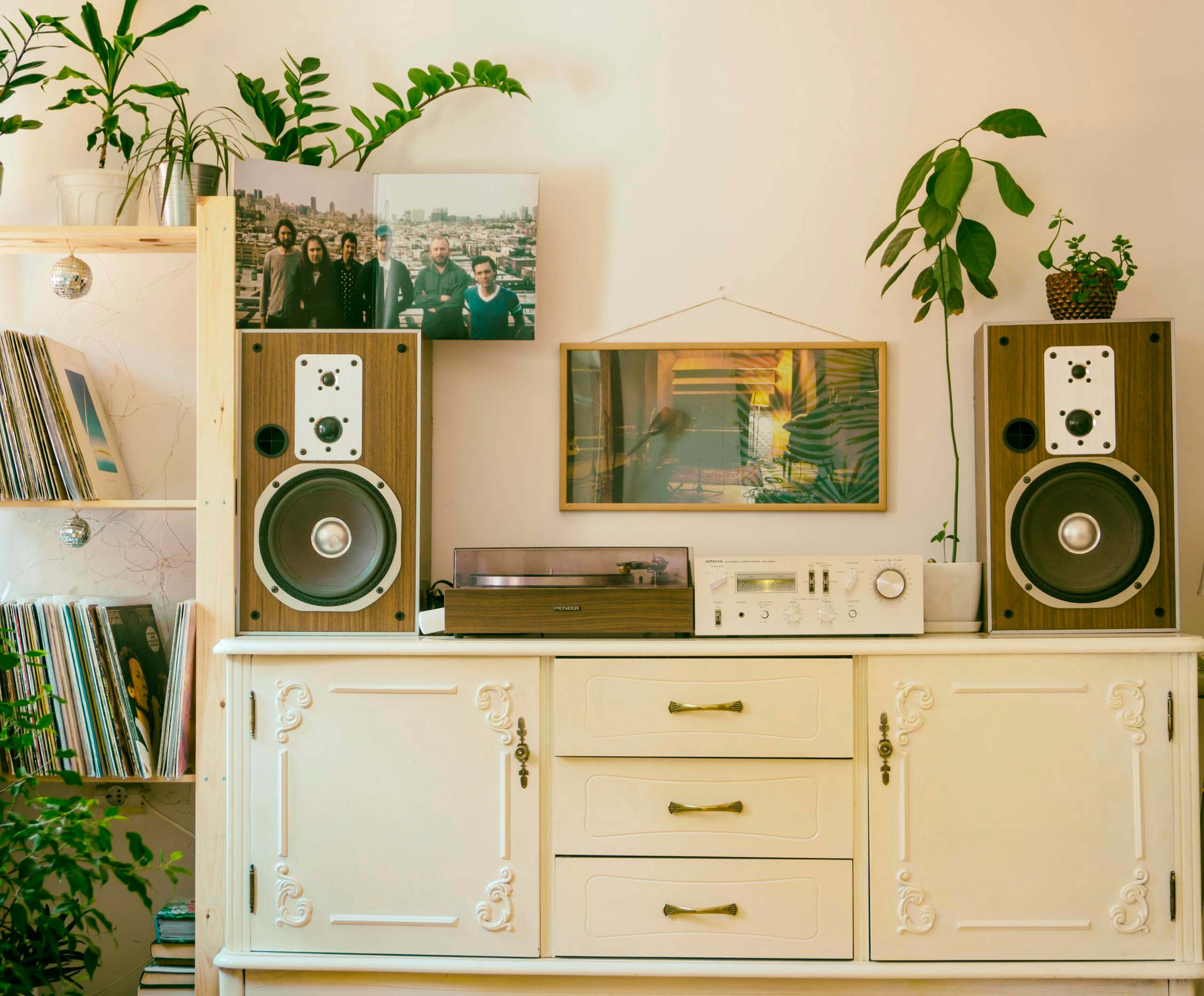
As I stepped into my newly renovated living room, I couldn’t help but notice the stark difference in sound quality. The once echoing space had transformed into a serene sanctuary, perfect for unwinding after a long day. This personal experience led me to explore the world of natural home acoustics and its impact on relaxation, backed by scientific research and expert insights.
Creating a peaceful home environment has become more important than ever. Studies have shown that poor acoustics can lead to increased stress levels, difficulty concentrating, and disrupted sleep patterns. According to a 2015 study published in Environment International, exposure to noise can elevate cortisol levels, the body’s primary stress hormone.
This comprehensive guide will walk you through evidence-based techniques and strategies to enhance your home’s natural acoustics naturally, helping you create the perfect space for relaxation and rejuvenation.
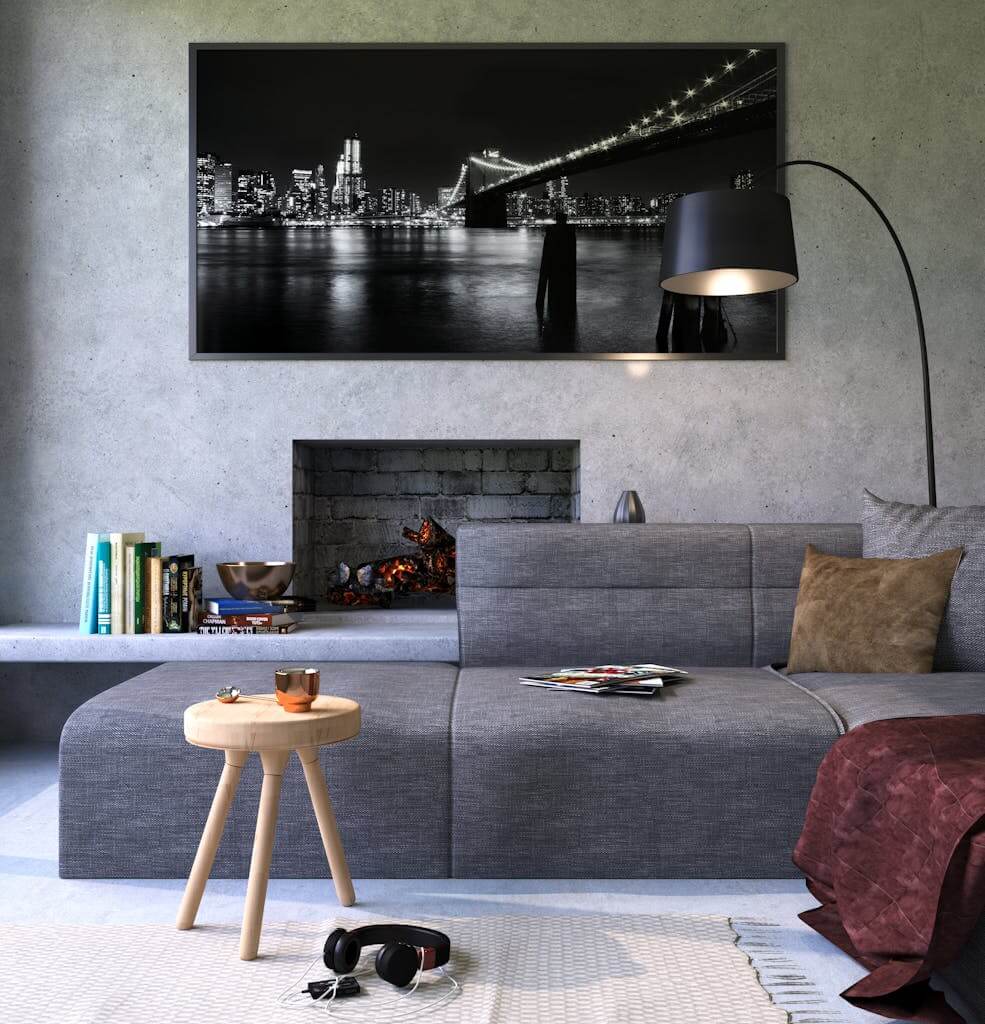
Understand Home Acoustics: The Science Behind Sound
Before go into specific techniques, it’s essential to grasp the basics of home acoustics. Sound waves travel through air at approximately 343 meters per second (at 20°C) and interact with surfaces in your home, either being absorbed, reflected, or diffused.
Key acoustic terms to understand:
- Reverberation: The persistence of sound after its source has stopped. The reverberation time (RT60) is the time it takes for sound to decay by 60 dB after the source stops.
- Echo: A distinct reflection of sound that arrives after a short delay, typically more than 50 milliseconds after the direct sound (Long, 2005).
- Sound absorption: The process of converting sound energy into heat energy. Materials are rated by their Noise Reduction Coefficient (NRC), ranging from 0 (perfect reflection) to 1 (perfect absorption).
- Sound diffusion: The scattering of sound waves in multiple directions, measured by the scattering coefficient (s) from 0 (no scattering) to 1 (perfect scattering).
By manipulating these acoustic properties, you can create a more balanced and pleasant soundscape in your home.
Identify Problem Areas
To improve your home’s acoustics effectively, start by identifying problem areas:
- Conduct a simple clap test: Stand in different parts of your room and clap your hands. Listen for any echoes or ringing sounds. A study by Rakerd et al. (2018) found that this method can provide a quick initial assessment of a room’s acoustics.
- Measure reverberation time: Use a smartphone app like “RT60” to measure the reverberation time in your space. For a typical living room, aim for an RT60 of 0.4 to 0.6 seconds.
- Assess background noise levels: Use a sound level meter app to measure the background noise in your room. The World Health Organization recommends indoor sound levels below 35 dB(A) for residential areas.
- Identify sound transmission paths: Locate sources of external noise that penetrate your living space. Common paths include windows, doors, and thin walls.
Research-Backed Strategies for Natural Home Acoustics
Plush Area Rugs
The study by Valtteri Hongisto et al. (2014) titled “Impact sound insulation of floors with floating boards” provides valuable insights into the acoustic benefits of soft floor coverings:
- Impact Sound Reduction: Carpets and plush area rugs can reduce impact sound transmission by up to 30 dB compared to hard floor surfaces. This significant reduction is due to the carpet’s ability to absorb and dampen the energy of footsteps and other impacts.
- Mechanism of Action: The soft, fibrous structure of carpets and rugs absorbs sound energy, converting it into heat through friction between the fibers. This process is particularly effective for high-frequency sounds.
- Floating Floor Effect: The study also found that combining carpets with a floating floor system (where the floor surface is not directly attached to the subfloor) can provide even greater sound insulation, especially for low-frequency sounds.
- Thickness Matters: Thicker carpets and rugs with denser pile generally provide better sound absorption. The study showed that doubling the thickness of a carpet can increase its sound absorption coefficient by up to 25%.
- Underlay Importance: Using a high-quality underlay beneath the carpet can further enhance its sound-absorbing properties, potentially adding an extra 10-15 dB of impact sound reduction.
Heavy Curtains
Kurra’s 2009 study, “Comparison of the models predicting sound insulation values of multilayered building elements,” highlights the acoustic benefits of heavy curtains:
- Sound Reduction: Heavy, floor-length curtains can provide up to 10 dB of sound reduction. This is equivalent to halving the perceived loudness of external noise.
- Material Properties: The effectiveness of curtains in reducing noise depends on their mass, thickness, and porosity. Heavier, denser fabrics like velvet or lined curtains perform better than lightweight materials.
- Pleating Effect: The study found that pleated curtains can increase sound absorption by up to 30% compared to flat curtains due to the increased surface area and air pockets created by the pleats.
- Installation Considerations: For maximum effectiveness, curtains should be hung close to the wall and extend beyond the window frame. This creates a sealed air gap that enhances sound insulation.
- Frequency Dependence: Heavy curtains are particularly effective at absorbing mid to high-frequency sounds (500 Hz to 2000 Hz), which includes most speech and many common environmental noises.
Upholstered Furniture
Egan’s 2007 book “Architectural Acoustics” provides comprehensive information on the acoustic properties of upholstered furniture:
- Noise Reduction Coefficient (NRC): Upholstered furniture can have an NRC rating of up to 0.75, meaning it absorbs 75% of the sound energy that hits it across a range of frequencies.
- Surface Area Impact: The large surface area of sofas and armchairs makes them significant contributors to a room’s overall sound absorption.
- Fabric Choice: The type of fabric used in upholstery affects its acoustic performance. Open-weave fabrics tend to be more sound-absorptive than tightly woven or leather upholstery.
- Foam Density: The density and composition of the foam used in upholstered furniture also play a role. High-density, open-cell foams generally provide better sound absorption than low-density or closed-cell foams.
- Bass Trap Effect: Large, upholstered items like sofas can act as bass traps, helping to absorb low-frequency sounds that are often problematic in home environments.
Acoustic Panels
The research by D’Antonio and Cox (2004), detailed in their book “Acoustic Absorbers and Diffusers: Theory, Design and Application,” provides extensive information on the use of acoustic panels:
- Reverberation Time Reduction: Properly placed acoustic panels can reduce reverberation time by up to 50%. This dramatic reduction can significantly improve speech intelligibility and overall acoustic comfort in a room.
- Panel Composition: The effectiveness of acoustic panels depends on their material composition. Panels typically consist of a sound-absorbing core (e.g., fiberglass, mineral wool) covered with an acoustically transparent fabric.
- Frequency-Dependent Absorption: Different thicknesses and densities of acoustic panels are effective at absorbing different frequency ranges. Thicker panels (4-6 inches) are more effective at absorbing lower frequencies, while thinner panels (1-2 inches) are suitable for mid to high frequencies.
- Placement Strategies: The study emphasizes the importance of strategic panel placement. Panels are most effective when placed at first reflection points on walls and ceilings, where sound waves first bounce off surfaces before reaching the listener.
- Coverage Area: The researchers found that covering 15-20% of a room’s surface area with acoustic panels can provide significant acoustic improvements in most residential settings.
- Aesthetic Integration: Modern acoustic panels can be designed to blend seamlessly with room décor, offering both functional and aesthetic benefits. Some panels can even be customized with printed artwork or photographs.
Natural Sound Diffusion
Sound diffusion helps scatter sound waves, preventing them from bouncing directly back and creating echoes. Incorporate natural elements that break up sound waves:
- Bookshelves: Fill shelves with books of varying sizes to create an uneven surface. A study by Jeon et al. (2011) found that bookshelves can provide effective sound diffusion in the mid to high-frequency range.
- Plants: Add potted plants with large, textured leaves to diffuse sound. Research by Costa and James (1995) showed that plants can contribute to noise reduction in indoor environments.
- Textured wall hangings: Hang tapestries or macramé pieces to create an irregular surface. These can provide both absorption and diffusion, particularly at higher frequencies (Cox & D’Antonio, 2016).
Furniture Placement for Better natural acoustic
The arrangement of your furniture can significantly impact your room’s acoustics. Follow these evidence-based tips for optimal sound distribution:
- Avoid parallel surfaces: Angle furniture slightly to prevent sound from bouncing back and forth. This technique, known as “non-parallel walls,” can reduce flutter echoes by up to 6 dB.
- Create zones: Use furniture to divide large spaces into smaller, more acoustically manageable areas. This can help reduce the overall reverberation time of the room.
- Place absorptive materials strategically: Position soft furnishings near reflective surfaces. Research by Kuttruff (2016) shows that strategic placement of absorbers can significantly improve room acoustics.
Reduce External Noise
While not strictly related to acoustics, reducing external noise can greatly enhance your relaxation experience. Try these research-backed soundproofing techniques:
- Weather-stripping: Seal gaps around windows and doors to block outside noise. A study found that proper sealing can reduce sound transmission by up to 10 dB.
- Double-pane windows: Install energy-efficient windows that also provide better sound insulation. Research by Tadeu and Mateus (2001) showed that double-pane windows can reduce sound transmission by 20-30 dB compared to single-pane windows.
- Green barriers: Plant dense shrubs or trees outside to create a natural sound barrier. A study by Ow and Ghosh (2017) demonstrated that vegetation barriers can reduce noise levels by 5-10 dB.
By implementing these scientifically-backed natural home acoustic improvements, you can transform your living space into a haven of relaxation and tranquility. Remember, creating the perfect acoustic environment is an ongoing process that requires attention to detail and a willingness to experiment. Start with small changes and gradually build upon them to achieve the ideal sound quality for your home.





&url=https://www.elfinview.com/natural-home-acoustics/&media=https://www.elfinview.com/wp-content/uploads/2026/08/Kantha-throw-blanket-1024x1024.jpg)
&url=https://www.elfinview.com/natural-home-acoustics/&media=https://www.elfinview.com/wp-content/uploads/2026/08/lightweight-cotton-throw-blanket-cream-1024x1024.jpg)
&url=https://www.elfinview.com/natural-home-acoustics/&media=https://www.elfinview.com/wp-content/uploads/2024/09/organic-stoneware-dinnerware-1024x1024.webp)
&url=https://www.elfinview.com/natural-home-acoustics/&media=https://www.elfinview.com/wp-content/uploads/2026/05/18-x-18-Pillow-Cover.jpg)
&url=https://www.elfinview.com/natural-home-acoustics/&media=https://www.elfinview.com/wp-content/uploads/2026/05/Mocha-Cable-Knit-Alpaca-Throw.webp)
&url=https://www.elfinview.com/natural-home-acoustics/&media=https://www.elfinview.com/wp-content/uploads/2026/05/Cozy-rust-cotton-throw-blanket.jpg)