Carpets and rugs can trap odors, making your home smell less than fresh. But you don’t need harsh chemicals to solve this problem. This guide will show you how to deodorize carpets and rugs using natural methods that are safe for your family and pets.
Why Carpets and Rugs Need Deodorizing
Carpets and rugs act like giant air filters in your home. They trap dust, dirt, pet hair, and other particles that can cause unpleasant smells. Over time, these odors can build up, especially in high-traffic areas or homes with pets and children.
Common sources of carpet odors include:
- Pet accidents
- Food and drink spills
- Moisture leading to mildew
- Cigarette smoke
- Everyday dirt and dust
Also Read >> How To Clean Popcorn Ceilings Safely
Odor-Specific Solutions
| Odor Type | Best Natural Solution |
|---|---|
| Pet Odors | Enzymatic cleaner + Baking soda |
| Food Smells | White vinegar spray |
| Musty Odors | Activated charcoal + Sunlight |
| Smoke Odors | Baking soda + Essential oils |
Top 5 Natural Deodorizers
Baking Soda
- Sprinkle 1 cup per 10 sq ft
- Leave overnight
- Vacuum thoroughly
White Vinegar
- Mix 1:1 with water in spray bottle
- Mist lightly on carpet
- Allow to air dry
Essential Oils
- Add 10-15 drops to 1 cup baking soda
- Sprinkle and leave for 2-3 hours
- Vacuum thoroughly
Activated Charcoal
- Place bowls around room
- Leave for 2-3 days
- Remove bowls
Fresh Herbs
- Grind dried herbs into powder
- Sprinkle 1/2 cup per room
- Leave for 1 hour, then vacuum
The Benefits and Limitations of Natural Deodorizing Methods
Using natural methods to deodorize carpets and rugs has several advantages:
- Safety: Natural ingredients are typically non-toxic and safe for children and pets.
- Cost-effectiveness: Many natural deodorizers use common household items.
- Environmentally friendly: Natural methods reduce the use of harsh chemicals in your home.
- Gentle on fabrics: Natural deodorizers are less likely to damage carpet fibers.
However, it’s important to note some potential drawbacks:
- Time-intensive: Natural methods often require more time and effort than chemical solutions.
- Variable effectiveness: Results can vary depending on the severity of the odor and carpet type.
- Allergies: Some natural ingredients, like essential oils, can be allergens for certain individuals.
Natural Ingredients for Deodorizing Carpets and Rugs
Several natural ingredients are excellent for removing odors from carpets and rugs:
1. Baking Soda
Baking soda is a powerhouse when it comes to absorbing odors. It’s cheap, readily available, and extremely effective.
How to use:
- Sprinkle baking soda liberally over the carpet (about 1 cup per 10 square feet).
- Let it sit for several hours or overnight.
- Vacuum thoroughly.
For tough odors, mix the baking soda with a few drops of essential oil before sprinkling.
Scientific backing: A study published in the Journal of Environmental Health Science and Engineering found that sodium bicarbonate (baking soda) was effective in removing odors from waste gases, demonstrating its odor-absorbing properties.
2. White Vinegar
White vinegar is another excellent natural deodorizer. Its acidity helps neutralize odors.
How to use:
- Mix equal parts water and white vinegar in a spray bottle.
- Lightly mist the carpet or rug. Don’t soak it!
- Allow to air dry completely.
The vinegar smell will disappear as it dries, taking other odors with it.
3. Essential Oils
Essential oils not only mask odors but can also have antibacterial properties. Popular choices include lavender, tea tree, and lemon.
How to use:
- Add 10-15 drops of essential oil to a cup of baking soda.
- Mix well and use as described in the baking soda method above.
Caution: Some people may be allergic to essential oils. Always test in a small, inconspicuous area first.
4. Activated Charcoal
Activated charcoal is highly absorbent and can trap odors effectively.
How to use:
- Place bowls of activated charcoal around the room with the smelly carpet.
- Leave for several days to absorb odors from the air.
Scientific backing: A study in the Journal of Hazardous Materials found that activated carbon was effective in removing various odorous compounds from indoor air.

5. Fresh Herbs
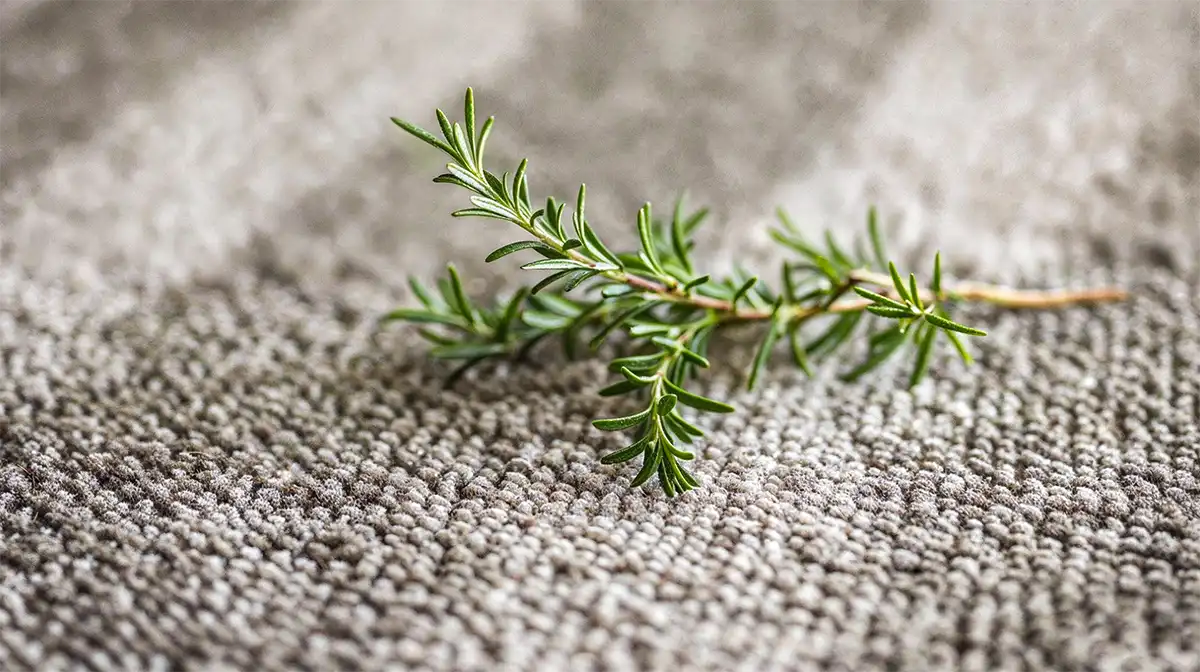
Herbs like rosemary, thyme, and mint can add a natural, fresh scent to your carpets.
How to use:
- Grind dried herbs into a fine powder.
- Sprinkle over the carpet (about 1/2 cup per room) and let sit for an hour.
- Vacuum thoroughly.
7-Step Deodorizing Process
- Ventilate the room
- Vacuum thoroughly
- Treat visible stains
- Apply natural deodorizer
- Let it work (time varies by method)
- Vacuum again Repeat if necessary
Addressing Stubborn Odors
For particularly stubborn odors, you may need to combine methods or repeat treatments:
- Enzymatic cleaners: For pet odors, use a natural enzymatic cleaner before applying baking soda.
- Steam cleaning: Use a steam cleaner with a vinegar solution for deep-set odors.
- Sunlight and fresh air: If possible, expose the carpet to direct sunlight and fresh air for several hours.
When to Seek Professional Help
Consider professional cleaning for:
- Persistent pet odors
- Smoke damage
- Water damage and mildew
- Very old or deeply embedded odors
Common Questions About Natural Carpet Deodorizing
Deodorizing carpets and rugs naturally is not only possible but often more effective and safer than using chemical-laden products. By using common household items like baking soda, vinegar, and activated charcoal, you can keep your carpets smelling fresh and clean.
Remember, the key to odor-free carpets is a combination of regular cleaning, prompt stain treatment, and occasional deep cleaning. With these natural methods and a bit of persistence, you can enjoy fresh, clean-smelling carpets and rugs throughout your home.
Whether you’re dealing with pet odors, food smells, or just the buildup of everyday life, these natural deodorizing methods offer a safe, effective, and environmentally friendly solution. Try them out and breathe easier in your fresher-smelling home!