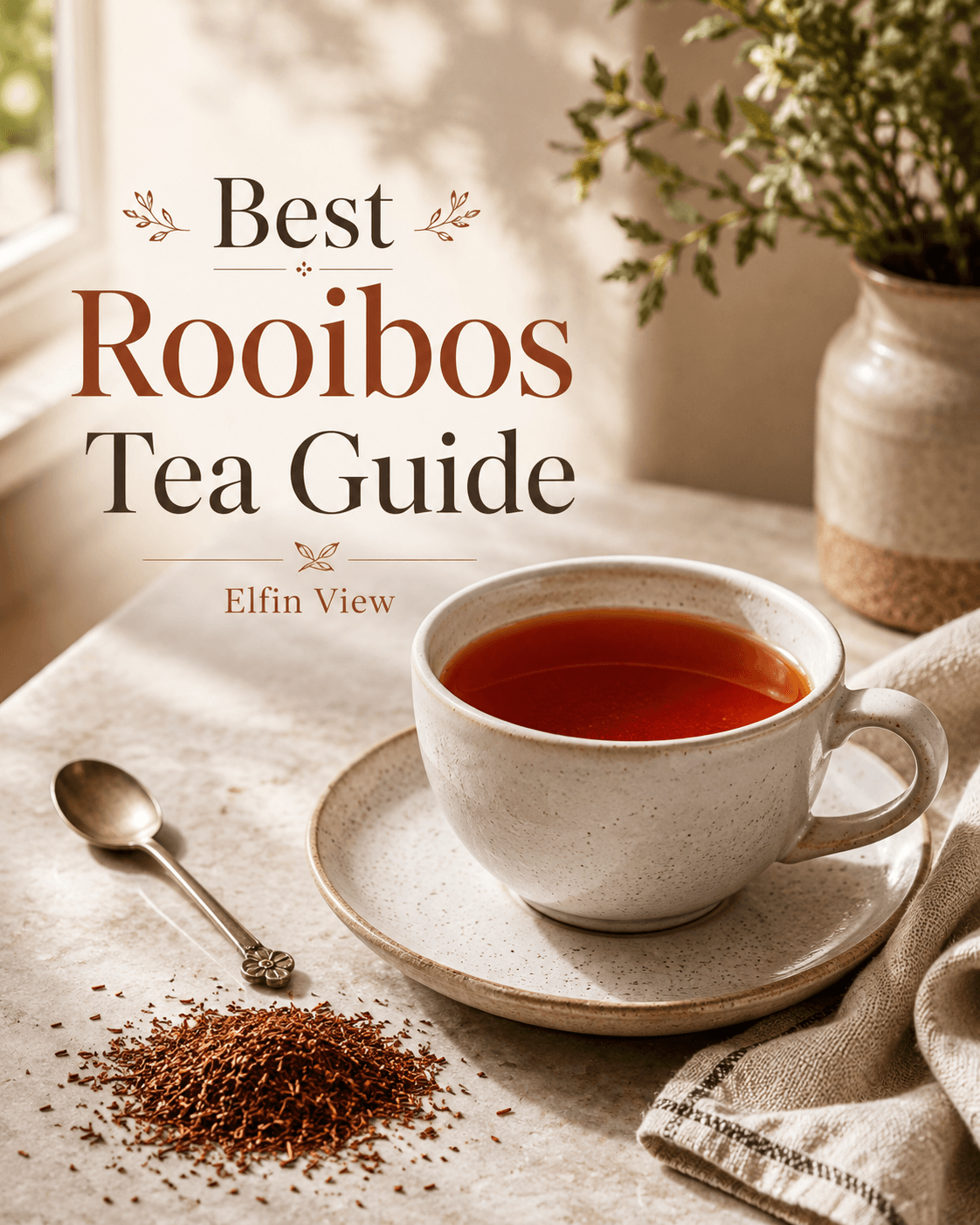
If you are looking for the best rooibos tea, you have a lot of good options. This guide covers 7 top tea bag brands and 7 loose leaf brands, a quick comparison table, flavor breakdowns by type, and our top organic picks. Whether you are new to rooibos or looking to upgrade your current brand, this is the only guide you need.
TLDR: Quick Picks
Quick Comparison: Best Rooibos Tea Brands at a Glance
| Brand | Type | Organic | Best For | Price Range |
|---|---|---|---|---|
| Twinings Pure Rooibos | Tea bags | No | Beginners and daily drinkers | $ |
| Celestial Seasonings | Tea bags | No | Budget buyers | $ |
| Numi Organic Rooibos | Tea bags | Yes | Certified organic buyers | $$ |
| My Red Tea | Tea bags | Yes | Single-origin, farm-sourced | $$ |
| The Republic of Tea | Tea bags | Yes | Flavor variety | $$ |
| Yogi Rooibos Tea | Tea bags | Yes | Spiced blends | $ |
| Harney & Sons | Tea bags + loose | Yes | Premium quality | $$ |
| Numi Organic (loose) | Loose leaf | Yes | Organic loose leaf | $$ |
| Republic of Tea (loose) | Loose leaf | Yes | Everyday loose leaf | $$ |
| Harney & Sons Rooibos Chai | Loose leaf | Yes | Spiced loose leaf | $$ |
| Yogi Organic (loose) | Loose leaf | Yes | Beginners to loose leaf | $ |
| Tea Forte Red Rooibos | Loose leaf | No | Gifts and presentation | $$$ |
| Rishi Tea Organic | Loose leaf | Yes | Premium loose leaf | $$$ |
| Davidson’s Organic | Loose leaf | Yes | Bulk buying | $ |
What Is Rooibos Tea?
Rooibos (pronounced ROY-boss) is a caffeine-free herbal tea made from the leaves of the Aspalathus linearis plant. It grows only in the Cederberg region of South Africa’s Western Cape, which means every cup of rooibos comes from one small part of the world.
The leaves are fermented and dried in the sun, which gives traditional rooibos its deep reddish-brown color and naturally sweet, slightly nutty flavor. It has no caffeine, very low tannins compared to black tea, and a long history as both a daily drink and a home remedy in South Africa. Today it is one of the fastest-growing specialty teas in the world.
Types of Rooibos Tea and What They Taste Like
Before picking a brand, it helps to know which type of rooibos you want. They taste very different from each other.
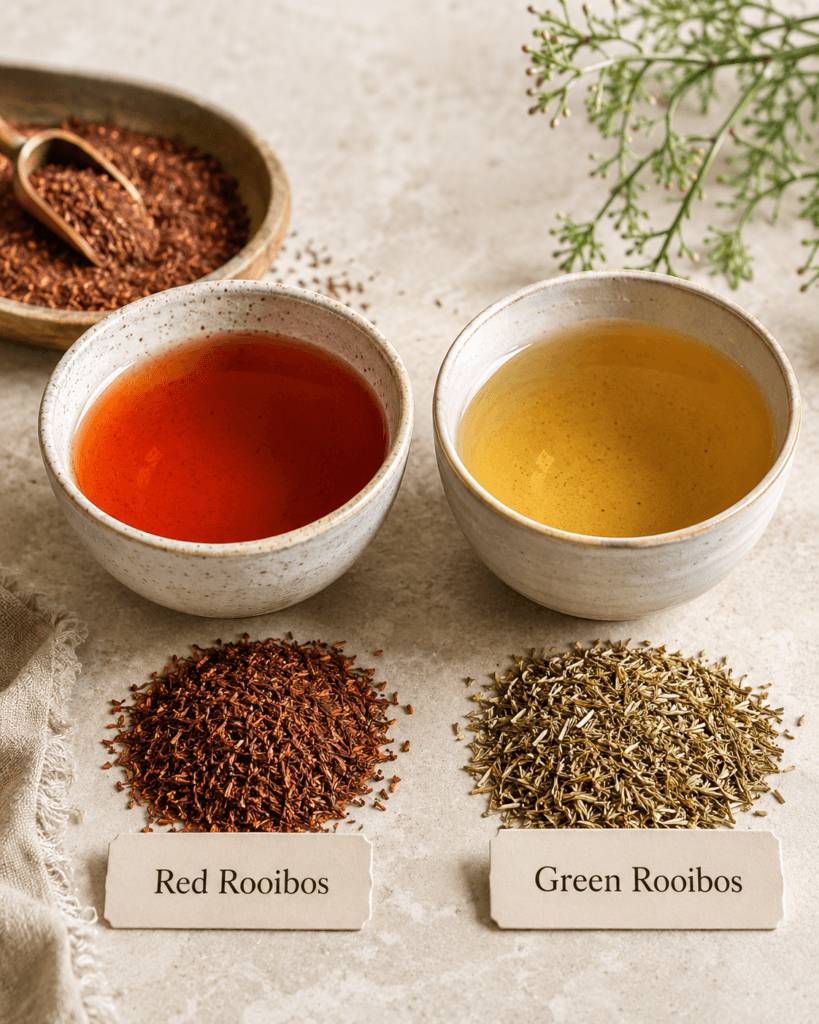
Traditional Red Rooibos This is the classic version. The leaves are fermented before drying, which creates the signature deep red color. The flavor is earthy, slightly sweet, and has faint notes of vanilla and honey. It is smooth and easy to drink on its own without milk or sweetener. This is the type most people are thinking of when they search for rooibos tea.
Green Rooibos Green rooibos skips the fermentation step. The leaves are dried immediately after harvest, which keeps them lighter in color and flavor. It tastes grassy, fresh, and slightly floral, closer to a green tea in character. It also has higher antioxidant levels than red rooibos because it is less processed.
Honeybush Rooibos Made from the Cyclopia plant rather than Aspalathus linearis, honeybush is a close relative of rooibos. It has a sweeter, more distinctly honey-like flavor. Many brands blend it with traditional rooibos for a naturally sweet cup that needs no added sugar.
Vanilla Rooibos Traditional rooibos blended with natural vanilla flavoring. It tastes creamy and dessert-like. This is one of the most popular flavored varieties and a good entry point for people who find plain rooibos too earthy.
Chai Rooibos Rooibos blended with warm spices like cinnamon, ginger, cardamom, and cloves. It is spicy, warming, and works very well with milk. A good substitute for masala chai for people avoiding caffeine.
Citrus Rooibos Rooibos blended with dried orange, lemon, or grapefruit peel. It is bright, tangy, and refreshing. Best served cold or iced in warmer months.
The 7 Best Rooibos Tea Bag Brands
1. Twinings Pure Rooibos
Best for: Beginners and daily drinkers Organic: No | Price: $
Twinings is the most reliable entry point into rooibos tea. It has been around for over 300 years and their rooibos is consistent cup after cup. The flavor is smooth, mildly sweet, and slightly woody with a clean finish. It steeps to a warm copper-red color in about 3 to 4 minutes.
It is not organic, but Twinings sources its rooibos through a responsible sourcing program that works with South African farmers. At around $0.20 per bag, it is one of the most affordable options from a recognizable brand. You can find it in most grocery stores, which makes it easy to restock without ordering online.
If you have never tried rooibos before or want a dependable everyday cup, Twinings is the right starting point.
Flavor profile: Sweet, woody, earthy, clean finish Where to buy: Grocery stores, Amazon, Twinings.com
2. Celestial Seasonings Rooibos
Best for: Budget buyers Organic: No | Price: $
Celestial Seasonings makes a smooth, mild rooibos with a faint vanilla-like aroma that makes it naturally appealing without any added flavoring. It is caffeine-free, widely available, and sold in larger box counts than many premium brands, which brings the per-cup cost down even further.
The flavor is lighter than Twinings, which some people prefer. It is a good choice for anyone who finds traditional rooibos too bold or earthy. It works well iced and is one of the few rooibos tea options you can regularly find at big box stores like Target and Walmart.
Flavor profile: Light, smooth, faint vanilla notes, mild earthiness Where to buy: Target, Walmart, Amazon, grocery stores.
3. Numi Organic Rooibos
Best for: Buyers who want certified organic tea bags Organic: Yes (USDA Certified) | Price: $$
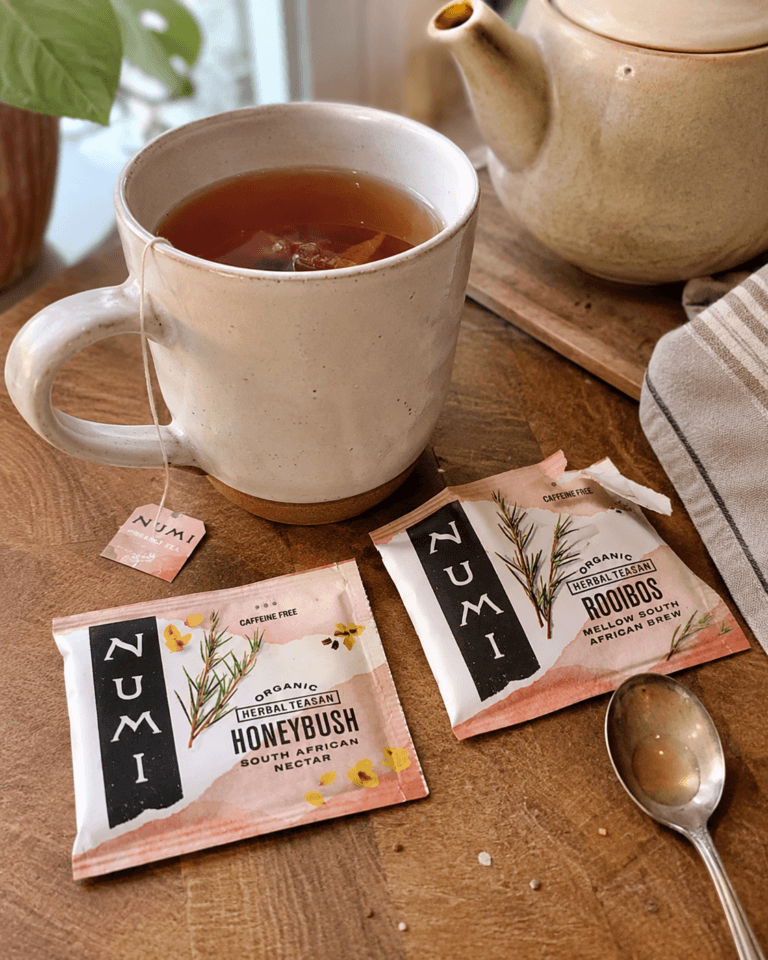
Numi is one of the most trusted organic tea brands in the US market. Their rooibos is USDA certified organic, fair trade, and packaged in non-GMO, microplastic-free tea bags. It is sourced from South Africa and has a deeper, more robust flavor than Twinings or Celestial Seasonings.
The taste is earthy and full-bodied with a natural sweetness that comes through even without honey or sugar. Each box typically has 18 bags, which makes it pricier per box but reasonable per cup. It is the top pick for anyone who prioritizes organic certification and ethical sourcing over price.
Flavor profile: Bold, earthy, robust, naturally sweet Where to buy: Whole Foods, Amazon, Numi Organic website
4. My Red Tea
Best for: Single-origin, farm-sourced rooibos Organic: Yes (USDA Certified) | Price: $$
My Red Tea is a South African brand that sells directly to consumers in the US. Every bag is sourced from a single origin in South Africa’s Western Cape, which means you know exactly where your tea is coming from. The bags are tagless, GMO-free, and USDA certified organic.
What sets My Red Tea apart from bigger brands is the freshness. Because it is sourced directly and shipped in higher volumes at a time, the tea retains more of its natural flavor. It comes in 80-bag packs, which brings the per-cup cost down while keeping the quality high. If you drink rooibos daily and want organic without paying premium-brand prices, this is the best value on this list.
Flavor profile: Clean, naturally sweet, earthy, smooth finish Where to buy: Amazon, My Red Tea website.
5. The Republic of Tea
Best for: Flavor variety Organic: Yes (select varieties) | Price: $$
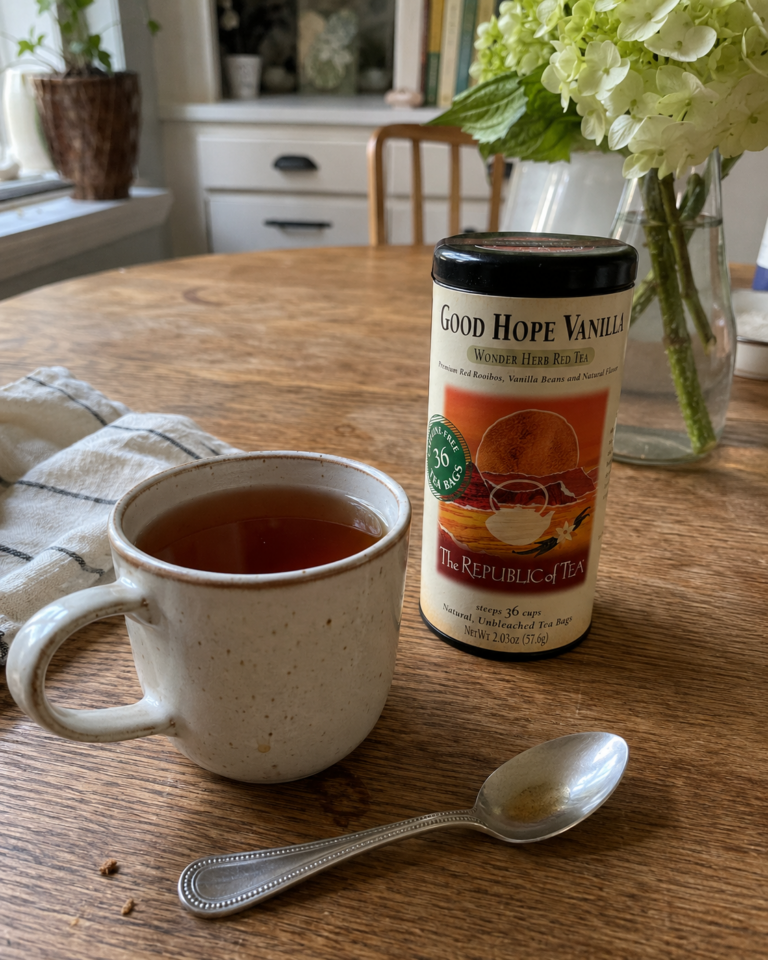
The Republic of Tea makes a wide range of rooibos blends including plain red rooibos, republic red chai, and several fruit-forward flavored options. Their plain rooibos has a naturally sweet, slightly honey-like flavor that is easy to drink without any add-ins. The tea bags come in a resealable tin, which keeps them fresh longer than boxes.
The brand is sold at specialty retailers and their website, not usually at regular grocery stores. Their blended rooibos options are some of the most interesting on the market if you want to move beyond a straight cup. For caffeine-free variety drinkers who like to rotate flavors, this brand has the widest selection on this list.
Flavor profile: Sweet, mild honey notes, clean and smooth Where to buy: Whole Foods, specialty tea shops, Amazon, Republic of Tea website
6. Yogi Rooibos Tea
Best for: Spiced blends and cold weather drinking Organic: Yes | Price: $
Yogi blends their rooibos with warming spices including cinnamon, ginger, and cardamom. The result is a spiced cup that works especially well in fall and winter or as a caffeine-free alternative to masala chai. It is organic, affordable, and widely available in health food stores.
The spice level is moderate, not overpowering. It pairs well with a splash of oat milk or almond milk if you like a creamier cup. If you want plain rooibos, this is not the right pick. But if you like the idea of a warming herbal blend that is a little more interesting than a straight cup, Yogi is one of the best options at this price point.
Flavor profile: Warm, spiced, cinnamon-forward with ginger heat Where to buy: Whole Foods, health food stores, Amazon.
7. Harney & Sons Rooibos
Best for: Premium quality and gifting Organic: Yes (select varieties) | Price: $$
Harney & Sons is one of the most respected names in specialty tea. Their rooibos is light, slightly fruity, and exceptionally clean in flavor compared to the earthier options on this list. It comes in their signature tins, which make it a genuinely nice gift for a tea drinker.
The brand offers rooibos in both tea bags and loose leaf formats, which makes it flexible for different brewing preferences. Their loose leaf rooibos chai is a standout product. The price is higher than most on this list, but the quality justifies it for a special occasion purchase or a step-up from daily supermarket tea.
Flavor profile: Light, slightly fruity, clean, mild earthiness Where to buy: Harney & Sons website, Amazon, specialty grocery stores.
Best Organic Rooibos Tea: Top Picks
If organic certification matters to you, here are the brands on this list that carry verified USDA organic status:
Best organic tea bag: Numi Organic Rooibos. USDA certified, fair trade, microplastic-free bags, robust flavor.
Best organic single-origin: My Red Tea. USDA certified, directly sourced from South African farms, sold in 80-bag packs for better value.
Best organic loose leaf: Rishi Tea Organic Rooibos. USDA certified, premium flavor, smooth and well-balanced.
Best organic bulk: Davidson’s Organic Rooibos. Large pack sizes, certified organic, consistent quality, good for daily high-volume drinkers.
A note on organic certification: not every brand that sources from South Africa is certified organic. Twinings and Celestial Seasonings use responsible sourcing practices but are not USDA certified. If organic certification is a priority, stick to Numi, My Red Tea, Rishi, or Davidson’s.
The 7 Best Loose Leaf Rooibos Tea Brands
Loose leaf rooibos gives you more control over brew strength, and the tea itself is typically fresher and higher quality than what goes into pre-made bags. Here are the best options.
1. Numi Organic Tea Rooibos (Loose Leaf)
Best for: Certified organic loose leaf Organic: Yes | Price: $$
Numi’s loose leaf rooibos carries the same USDA organic and fair trade credentials as their tea bag version. The flavor is smooth, slightly creamy, and earthy with a naturally sweet finish. Use 1 to 2 teaspoons per cup and steep for 5 to 7 minutes in water just off the boil.
2. The Republic of Tea Organic Rooibos (Loose Leaf)
Best for: Everyday loose leaf drinking Organic: Yes | Price: $$
This is a reliable, easy-drinking loose leaf rooibos with a sweet, earthy flavor and no bitterness even with a longer steep. The resealable tin keeps it fresh. A good choice for someone switching from tea bags to loose leaf for the first time.
3. Harney & Sons Rooibos Chai (Loose Leaf)
Best for: Spiced loose leaf blends Organic: Yes | Price: $$
Harney blends their rooibos with cinnamon, cardamom, and ginger for a chai-style loose leaf that is warming and complex. It is the most flavorful option on this list and works exceptionally well with milk. Brew it strong (2 teaspoons per cup, 7 minutes) for the best results.
4. Yogi Tea Organic Rooibos (Loose Leaf)
Best for: Loose leaf beginners Organic: Yes | Price: $
Yogi’s loose leaf rooibos has additional cinnamon, ginger, and vanilla that makes the transition from tea bags to loose leaf easier. The spices round out the flavor so that small brewing inconsistencies are less noticeable. Affordable and widely available.
5. Tea Forte Red Rooibos (Loose Leaf)
Best for: Gifts and presentation Organic: No | Price: $$$
Tea Forte packages their rooibos in beautiful pyramid infusers that look impressive as a gift. The flavor is smooth, mellow, and slightly sweet. The packaging is the real selling point here. If you are buying for someone who appreciates presentation as much as taste, Tea Forte is a strong choice.
6. Rishi Tea Organic Rooibos (Loose Leaf)
Best for: Premium loose leaf quality Organic: Yes | Price: $$$
Rishi Tea is one of the most respected specialty tea importers in the US. Their organic rooibos is sourced from high-quality South African farms and has a smooth, balanced flavor with a light natural sweetness. It is the best-tasting loose leaf rooibos on this list. The price is higher, but if you drink loose leaf regularly and want the best version of a straight rooibos cup, this is it.
Flavor profile: Smooth, balanced, lightly sweet, clean finish
7. Davidson’s Organic Rooibos (Loose Leaf)
Best for: Bulk buying and daily use Organic: Yes | Price: $
Davidson’s sells organic rooibos in larger quantities than most brands, making it the best value per cup on the loose leaf list. The flavor is consistent, smooth, and earthy. It does not have the complexity of Rishi or the packaging appeal of Tea Forte, but for a high-volume daily drinker who wants organic without spending premium prices every month, Davidson’s is the practical choice.
Flavor profile: Earthy, smooth, mild sweetness, no bitterness
Tea Bags vs. Loose Leaf Rooibos: Which Should You Buy?
Choose tea bags if:
- You want convenience with no extra equipment
- You are new to rooibos and want to try it before committing
- You drink one or two cups a day
Choose loose leaf if:
- You drink rooibos daily and want better flavor and value over time
- You already own a tea strainer or infuser
- You want more control over brew strength
- You prefer less packaging waste
One tip that applies to both: buy an insert one size larger than your pillow cover. The same logic applies here. For loose leaf, always buy a little more than you think you need. It stores well in a sealed container for up to 18 months.
How to Brew Rooibos Tea
Rooibos is forgiving to brew. It does not go bitter the way green or black tea does if you steep it too long. Here are the basic methods.
Hot brew (tea bags): Boil fresh water. Pour over your tea bag and steep for 4 to 6 minutes. Remove the bag. Drink as-is or add a small amount of honey, a slice of lemon, or a splash of milk.
Hot brew (loose leaf): Use 1 to 2 teaspoons of loose rooibos per cup. Add boiling water (200 to 212 degrees F) and steep for 5 to 7 minutes. Strain and serve.
Cold brew: Add 2 tablespoons of loose rooibos or 2 tea bags to a pitcher of cold water. Refrigerate overnight (8 to 12 hours). Strain and serve over ice. Cold-brewed rooibos is naturally sweet and smooth with no bitterness.
Rooibos latte: Brew a double-strength cup using 2 tea bags or 2 heaping teaspoons of loose leaf. Steam or froth your milk of choice (oat milk works especially well). Pour the milk over the brewed rooibos. Add honey to taste.
Optimal water temperature: 200 to 212 degrees F. Unlike green tea, rooibos can handle fully boiling water with no problem.
Rooibos Tea Health Benefits
Rooibos has been studied for a range of potential health benefits. Here is a plain-language summary of what the research points to so far. Note that rooibos is not a medicine and should not replace professional medical care.
Rich in antioxidants. Rooibos contains aspalathin and quercetin, two antioxidants that help protect cells from damage caused by free radicals. Green rooibos has higher levels than traditional red rooibos.
Caffeine-free. Unlike black tea or green tea, rooibos has zero caffeine. It is safe to drink in the evening and a good option during pregnancy or for anyone avoiding caffeine for health reasons.
Low in tannins. Traditional tea and coffee are high in tannins, which can interfere with iron absorption. Rooibos has very low tannin levels, making it easier on digestion.
May support heart health. Some studies suggest that regular rooibos consumption may help lower LDL (bad) cholesterol and raise HDL (good) cholesterol, though more research is needed. A study published by the National Library of Medicine found that six weeks of daily rooibos consumption positively affected cholesterol markers in at-risk adults.
May reduce inflammation. Rooibos contains anti-inflammatory compounds that may help with inflammation-related conditions. This is still an active area of research.
Good for skin. The antioxidants in rooibos make it a popular ingredient in skincare products. Drinking it regularly may also benefit skin from the inside.
For more detail on the health research behind rooibos, the South African Rooibos Council publishes ongoing research summaries at www.sarooibos.org.za.
A Brief History of Rooibos
Rooibos has been used for hundreds of years. The Khoisan people of the Cederberg region in South Africa were the first to harvest the plant and use it as a remedy. They would bruise the leaves with stones, leave them to ferment in the sun, and brew the dried leaves into tea.
In the 18th century, European settlers in the region began drinking it after observing the Khoisan. A Russian immigrant named Benjamin Ginsberg began exporting rooibos to Europe in the early 1900s, and by the 1930s it had built a reputation as a healthy, energizing drink. During World War II, supply disruptions made rooibos scarce and actually pushed more farmers to grow it commercially.
Today, all authentic rooibos still comes from the Cederberg region of South Africa’s Western Cape. It is protected by geographic indication, similar to how Champagne can only come from a specific region of France.