
A chawan is a Japanese tea bowl used to whisk and drink matcha. The word chawan comes from “cha” (tea) and “wan” (bowl). These bowls are wider and deeper than a coffee cup, which gives you enough room to whisk matcha powder into a smooth, frothy drink with a bamboo whisk.
If you are new to matcha, a chawan is the one tool that makes the whole ritual feel right. It is a bowl shaped by hundreds of years of tradition, and it changes how your tea tastes, looks, and feels in your hands.
Let’s walk through everything you need to know.
The Short History of the Chawan
Chawan have been part of Japanese life for more than 800 years.
The story starts in the 12th century, when a Buddhist monk named Eisai brought powdered green tea and tea plant seeds back from China. Tea drinking spread through Japanese temples first, then into the homes of samurai and nobles. The bowls used at the time were imported from China and called tenmoku.
By the 16th century, a tea master named Sen no Rikyū changed everything. He preferred simple, handmade bowls with natural shapes and earthy colors. This quiet, humble style became the heart of the Japanese tea ceremony, known as chanoyu. Rikyū worked with a potter named Chōjirō to create the first Raku chawan, which are still hand-formed and fired one at a time today.
According to The Metropolitan Museum of Art, the tea bowl became one of the most honored objects in Japanese art, often valued as much as a painting or sword.
That is why a good chawan feels so personal. You are holding something shaped by centuries of people who cared about small, quiet moments.
The Parts of a Chawan
Every chawan has a few key parts. Knowing them helps you pick a bowl that feels right and use it the way it was meant to be used.
Kuchizukuri (the rim). This is the lip of the bowl, where your mouth meets the tea. Some rims are smooth and rounded. Others are slightly uneven on purpose, which is part of the bowl’s character.
Mikomi (the interior). This is the inside of the bowl. A good chawan has a curved, open inside with enough room to whisk without splashing. The bottom is usually flat or gently rounded so your whisk can move freely.
Chadamari (the tea pool). This is the small dip at the bottom of the bowl where the last sip of tea gathers. Seeing a little pool at the end of your drink is a quiet part of the ritual.
Koudai (the foot). This is the round base the bowl sits on. Potters often leave the koudai unglazed so you can see the raw clay. In tea ceremony, guests sometimes turn the bowl over to admire the foot.
Do (the body). The outer walls of the bowl. This is where you see the glaze, the brushstrokes, and any texture the potter left behind.
Traditional Styles of Chawan
There are dozens of chawan styles in Japan, and each one comes from a different region and pottery tradition. Here are the ones you will see most often.
Raku Chawan
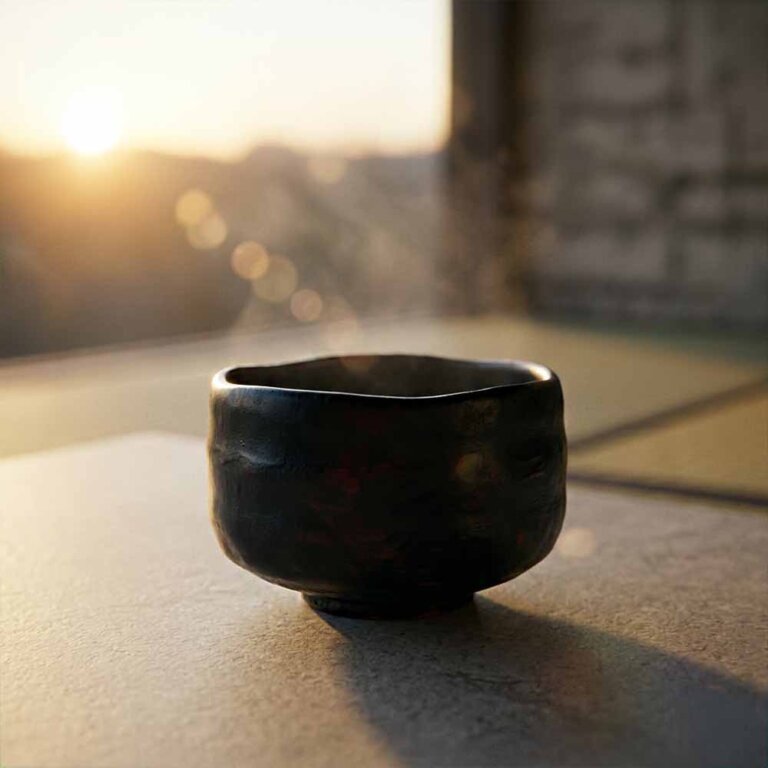
Raku bowls are hand-shaped, never thrown on a wheel, and fired at low heat. They have a soft, uneven feel and often come in black or red. The Raku family has been making them in Kyoto for 15 generations.
Hagi Chawan
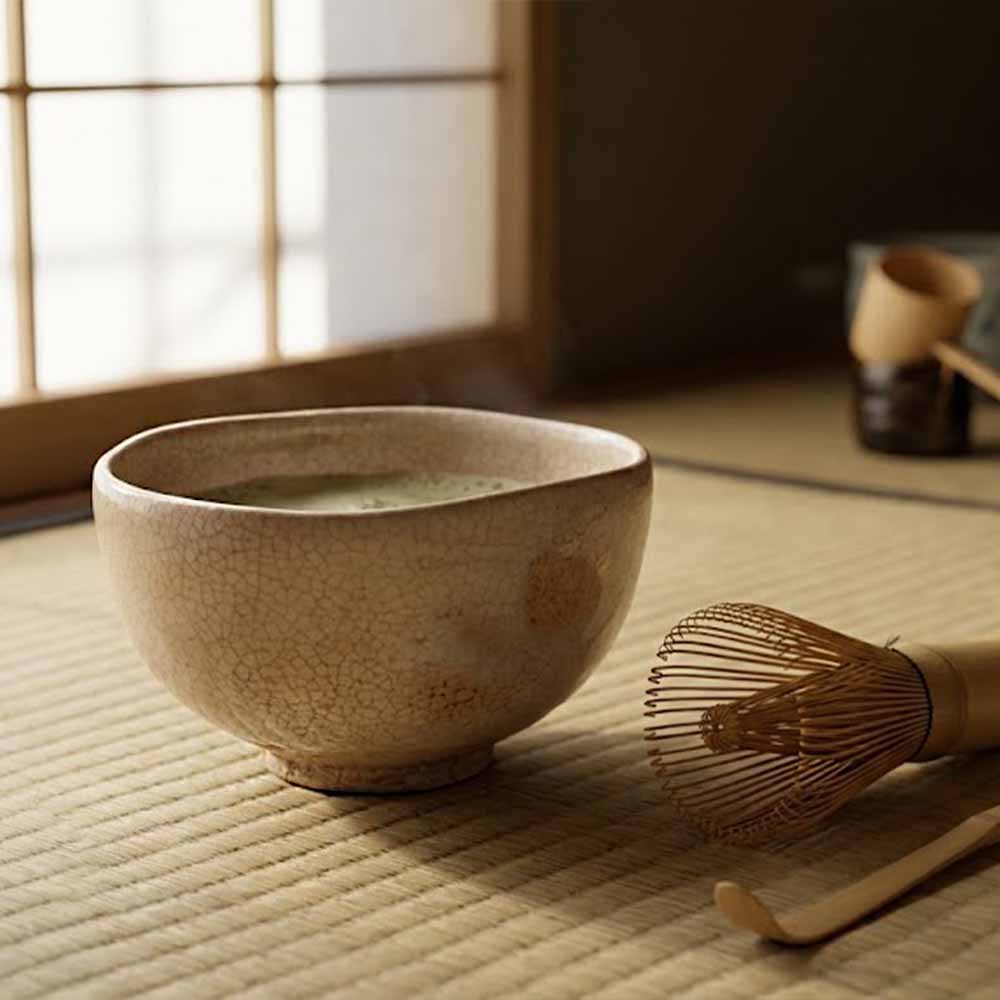
Hagi ware comes from the Hagi region in western Japan. The clay is porous, and the glaze develops tiny cracks over time. Tea lovers say a Hagi bowl “grows” with you, because the color shifts as it absorbs tea from years of use.
Karatsu Chawan
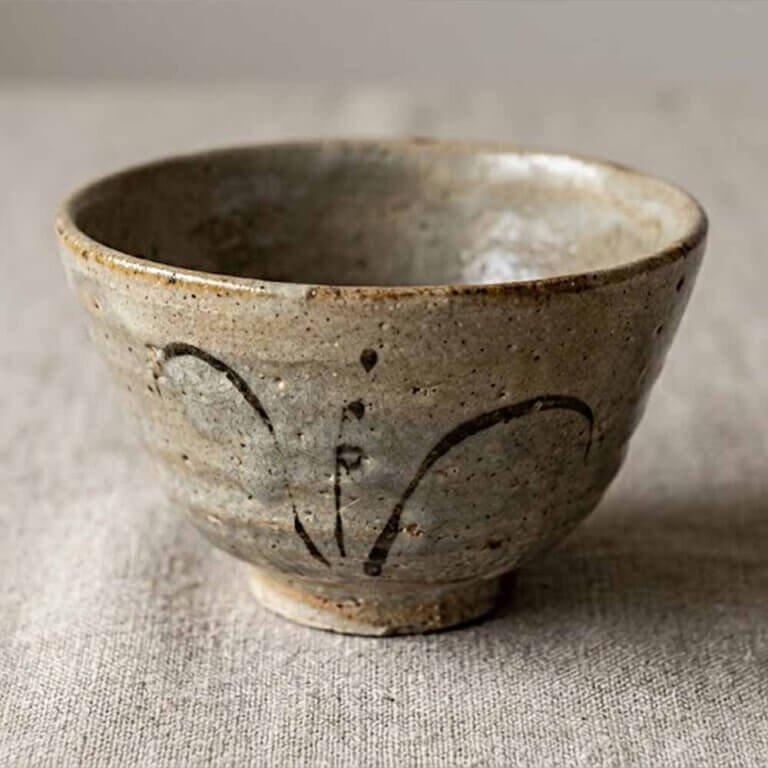
Karatsu bowls from Saga Prefecture have a rustic, earthy look. They often feature simple brush designs or a split glaze where two colors meet.
Shino Chawan
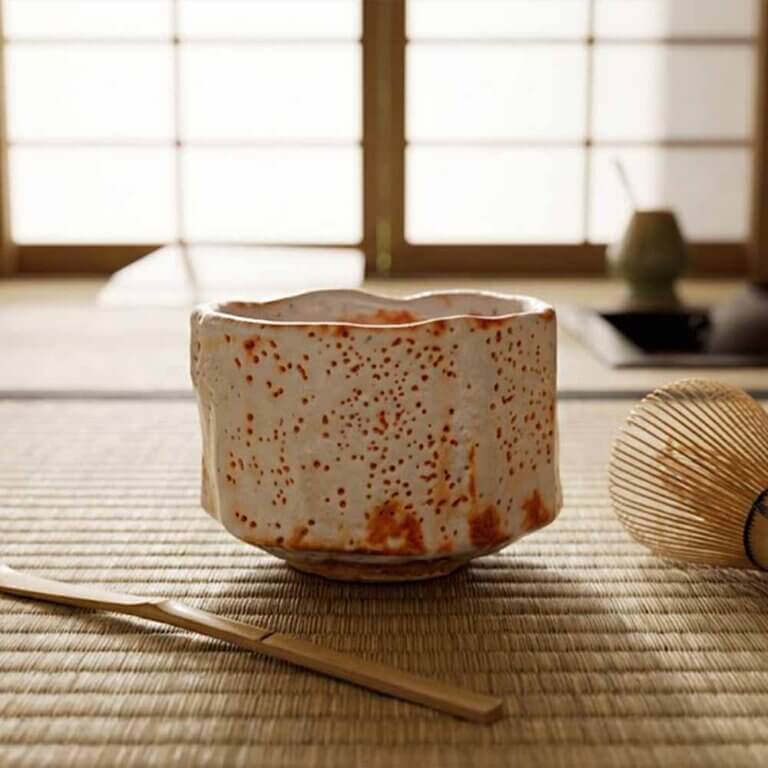
Shino ware is known for its thick, milky white glaze with small red or orange spots. It comes from the Gifu region and has a soft, warm look.
Oribe Chawan
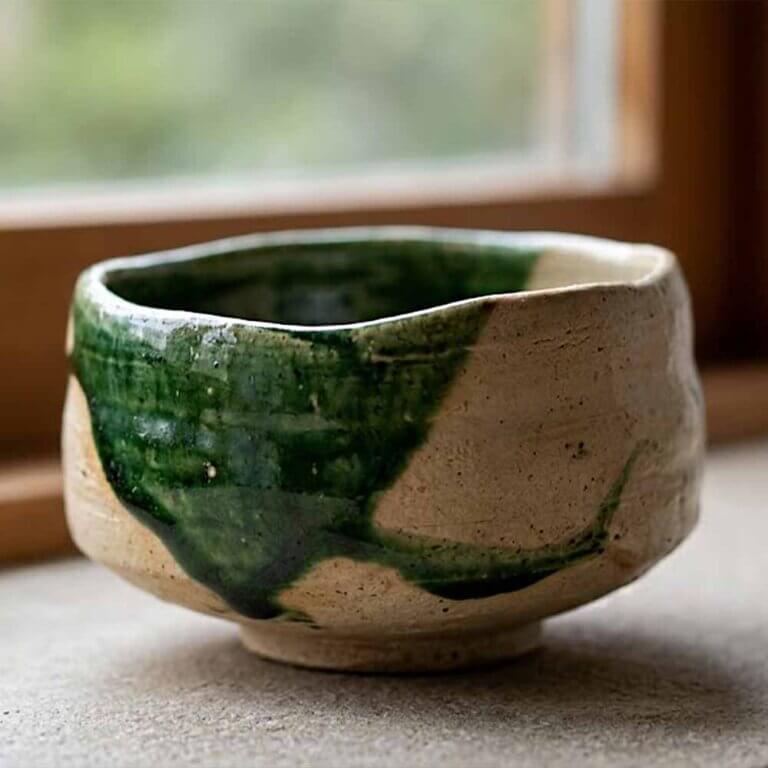
Oribe bowls are famous for their bold green glaze and playful shapes. They are named after the tea master Furuta Oribe, who loved designs that broke the usual rules.
Bizen Chawan
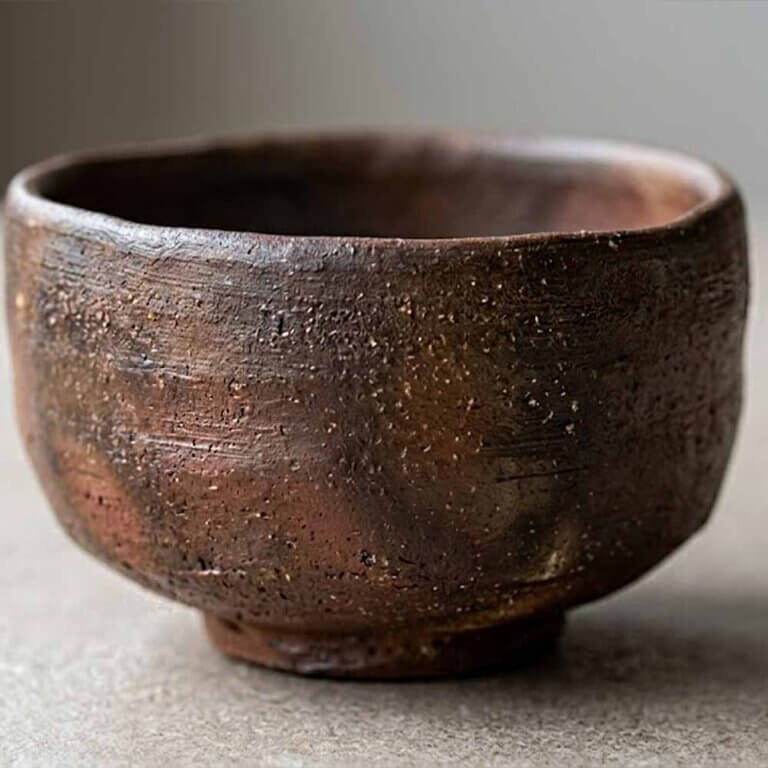
Bizen ware has no glaze at all. The bowls are fired in a wood kiln for days, and the ash and flame leave natural patterns on the clay. Each one is completely unique.
Summer Bowls vs Winter Bowls
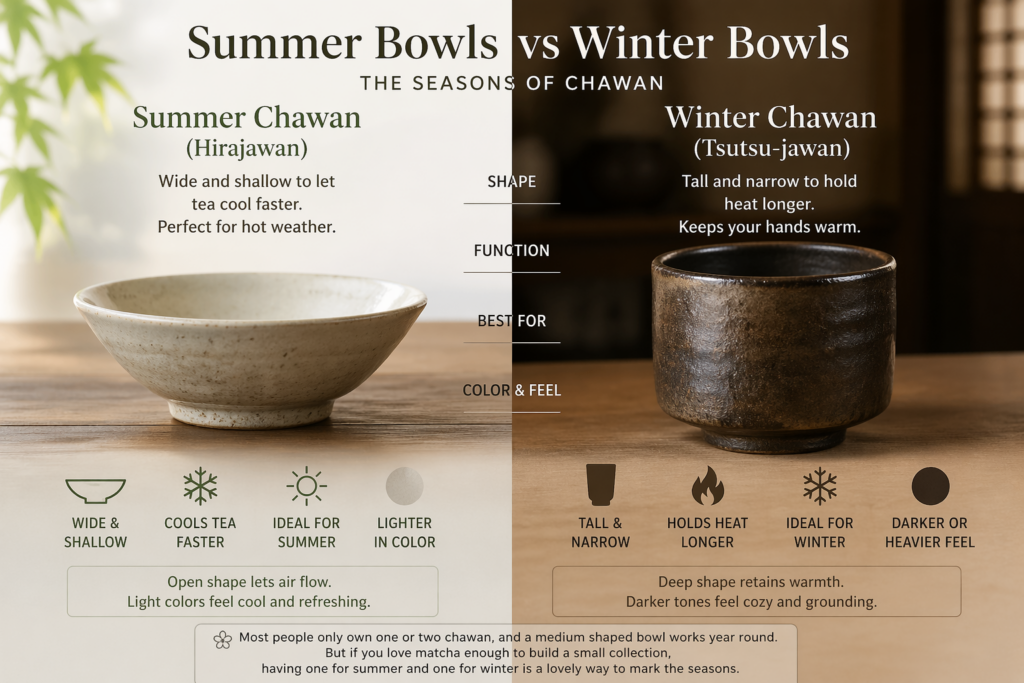
One of the most beautiful details about chawan is that they change with the seasons.
Summer chawan (hirajawan). These are wide and shallow. The open shape lets the tea cool faster, which is perfect for hot weather. They are often lighter in color too.
Winter chawan (tsutsu-jawan). These are tall and narrow. The deep shape holds heat longer and keeps your hands warm while you drink. They are usually darker or heavier in feel.
Most people only own one or two chawan, and a medium shaped bowl works year round. But if you love matcha enough to build a small collection, having one for summer and one for winter is a lovely way to mark the seasons.
How to Use a Chawan for Matcha
Using a chawan is simple once you have done it a few times. Here is the basic method.
- Warm the bowl. Pour a little hot water into the chawan, swirl it around, and pour it out. This warms the bowl so your matcha stays hot.
- Dry the inside. Wipe the bowl gently with a clean cloth. A damp bowl will clump your matcha.
- Add matcha powder. Use about 1 to 2 grams, which is roughly half a teaspoon or one scoop with a bamboo chashaku.
- Pour hot water. Use water that is around 175°F, not boiling. Pour about 2 ounces over the powder.
- Whisk in an M or W shape. Hold the bowl steady with one hand and whisk briskly for 15 to 30 seconds. A gentle foam should form on top.
- Drink from the bowl. Turn the chawan slightly in your hand as a small gesture of respect, then sip slowly.
That’s it. The whole process takes less than two minutes, and it becomes one of the most calming parts of your day.
How to Choose Your First Chawan
If you are buying your first matcha bowl, these four things matter most.
Size. A good starter chawan holds about 10 to 13 ounces when full to the brim. That gives you enough room to whisk without splashing, but not so much space that your matcha spreads too thin.
Interior shape. Look for a bowl with a wide, curved inside and a flat bottom. Pointed or sharply angled bowls make whisking harder.
Weight. A chawan should feel grounded in your hands, but not so heavy that holding it with one hand gets tiring. Handmade bowls are usually a little heavier than machine-made ones.
Style that speaks to you. You will use this bowl almost every day. Pick a color, texture, or glaze that makes you happy to see on your counter. A plain white bowl works beautifully for minimalist homes. A dark Raku or Bizen piece adds warmth and earth tones. A soft Hagi bowl brings a quiet, aged feel.
If you are new to matcha, a simple black or white bowl with a wide shape is the easiest place to start.
How to Care for Your Chawan
A chawan can last for generations if you treat it well. Here is how.
- Wash by hand with warm water. Skip the soap when you can. Matcha does not leave behind oils, so a good rinse is usually enough. If you do need soap, use a tiny amount of mild dish soap.
- Never put it in the dishwasher. The heat and detergent can crack the glaze or strip the surface.
- Dry it right away. Wipe the inside and outside with a soft cloth. Store it upside down on a clean shelf so any last drops can drain.
- Handle with care. Most chawan are made from stoneware or earthenware, which can chip if knocked against a hard edge. Give it a soft landing spot in your kitchen.
- Let it age. Especially with Hagi or Bizen bowls, tiny color changes over time are part of the beauty. Do not try to scrub them away.
A well cared for chawan builds character. The small marks and shifts become part of its story, and part of yours.
Chawan Frequently Asked Questions
Bringing the Chawan Into Your Home
A chawan is one of those rare objects that looks beautiful sitting on a shelf and earns its place every morning. It is a piece of art, a kitchen tool, and a small daily ritual all at once.
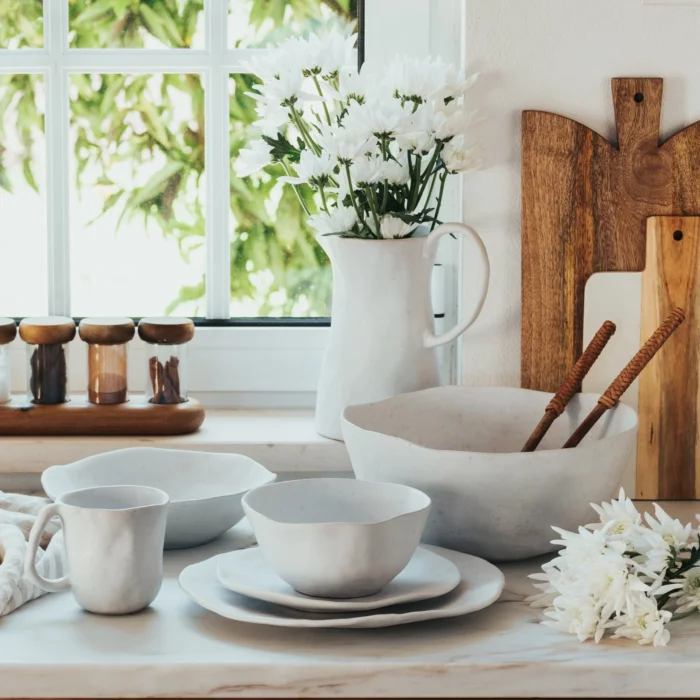
If you are drawn to minimalist Japanese design, a handmade matcha bowl is one of the easiest ways to bring that feeling into your space. It pairs naturally with stoneware, light wood, linen, and quiet corners of the home where you want to slow down for a few minutes.
Whether you choose a soft white bowl, a deep black Raku, or a rustic Bizen piece with wood fired marks, the right chawan will feel like yours the minute you hold it.
And once you do, that slow, quiet moment of whisking matcha in the morning becomes something you look forward to every day.How to Style a Blanket Ladder | Inspirations and TipsSustainable Home 101: Steps to an Eco-Friendly Haven