Bring a touch of paradise into your home with naturally stunning tropical indoor plants! These vibrant and exotic beauties not only add a pop of color and life to your space but also improve air quality and create a calming atmosphere. However, successfully cultivating these tropical treasures indoors requires understanding their specific needs.
Factors to Consider When Growing Tropical Plants Indoors
- Light Requirements: Most tropical plants thrive in bright, indirect light. Avoid harsh, direct sunlight, which can scorch leaves. Low-light tolerant varieties like certain snake plants and philodendrons are available but may have less vibrant foliage.
- Humidity: Tropical plants prefer warm and humid environments, ideally with 50-60% humidity levels. Grouping plants together, placing them on a pebble tray filled with water, or using a humidifier can help increase humidity.
- Temperature: Maintain a comfortable temperature range between 65-85 degrees Fahrenheit. Avoid cold drafts or placing plants near heating or air conditioning vents.
- Watering and Drainage: Water your tropical plants when the top inch of soil feels dry to the touch. Overwatering is a common culprit for plant failure, so ensure pots have drainage holes to allow excess water to drain.
- Fertilizing: During the growing season (spring and summer), fertilize your tropical plants with a balanced fertilizer according to the package instructions. Most don’t require frequent feeding.
- Pest Control: Regularly monitor your plants for common indoor pests like mealybugs, gnats, or spider mites. Address infestations promptly with insecticidal soap or neem oil.
Benefits of Growing Tropical Indoor Plants
- Beauty and Ambiance: Tropical plants boast vibrant foliage and unique shapes, adding a touch of the tropics to any room.
- Air Purification: These natural air filters help remove toxins and pollutants, creating a healthier indoor environment.
- Improved Well-being: Studies suggest that indoor plants can reduce stress, boost mood, and even improve sleep quality.
- Sense of Accomplishment: Nurturing and caring for your tropical plants can be a rewarding and therapeutic hobby.
Also Read >> 12 Easy Care Houseplants for Busy Homeowners
Top 17 Easy-to-Grow Tropical Indoor Plants for Indoors
If you’re new to the world of tropical houseplants, fret not! Here are 17 easy-to-grow varieties perfect for beginners:

1. Monstera deliciosa (Swiss Cheese Plant)
Species: Monstera deliciosa. Lush, split leaves with unique holey patterns (fenestrations) that develop as the plant matures.
What Is Monstera Deliciosa?
Monstera deliciosa, also known as the Swiss Cheese Plant, is a tropical plant native to Central America. It’s famous for its:
- Large, glossy green leaves
- Natural splits and holes (called fenestrations)
- Climbing growth habit
- Light: Bright, indirect light. Avoid harsh direct sun, which can scorch leaves. East or south-facing windows with sheer curtains are ideal.
- Mature Size: Up to 8 ft tall indoors, with large, wide leaves reaching up to 2 ft long. Difficulty: Easy. Relatively low-maintenance once established.
- Best Use Case: Large floor plant in a spacious room, statement piece. Can also be trained to climb a moss pole. Pair it with one of our handmade terracotta planters for a statement piece
Warning: Toxic to pets and children if ingested. Keep out of reach.
Special Tip: Provide a moss pole for aerial roots to climb and encourage leafy growth. Wipe leaves occasionally with a damp cloth for better shine.
Fun Fact: The holes in their leaves (fenestrations) help reduce wind resistance in their natural rainforest habitat.
Growth Style: Climbing vs. Spreading
In its natural habitat, Monstera is a climbing plant, not a bush.
You have two styling options:
1. Let It Spread (Natural Look)
- Leaves grow outward
- Great for wide spaces or shelves
2. Train It to Climb (Designer Look)
- Use a moss pole or stake
- Encourages:
- Bigger leaves
- More dramatic splits
- Upright, structured growth
👉 If you want that Pinterest-worthy aesthetic, go with a moss pole.

2. Calathea (Peacock Plant)
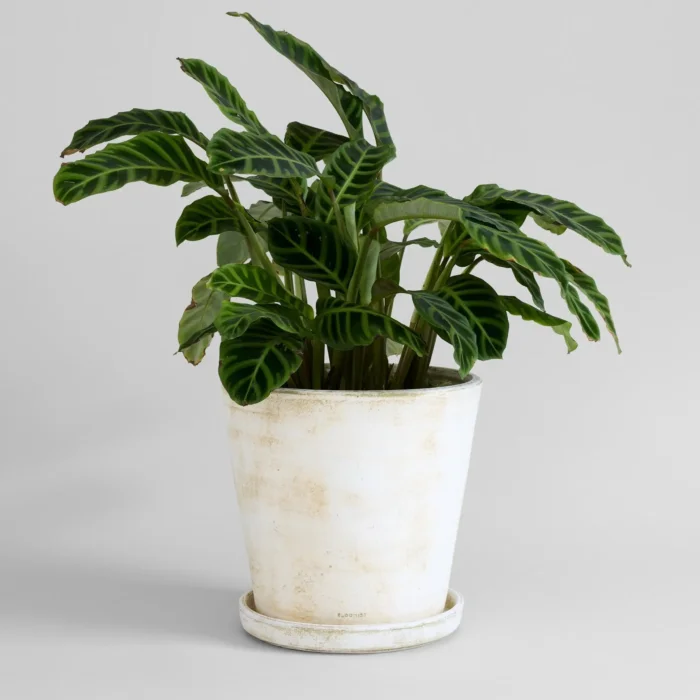
Species: Varies (Calathea lancifolia, Calathea orbifolia, etc.). Beautifully patterned leaves with vibrant colors and interesting markings, resembling feathers or peacock tails. If you’re drawn to plants that look like living art, Calathea is probably already on your radar. With bold patterns, deep greens, silvers, and even purple undersides, this plant instantly elevates your space.
What Is Calathea (Peacock Plant)?
Calathea is a group of tropical plants known for their ornamental foliage. Popular varieties include:
- Calathea orbifolia (large, striped leaves)
- Calathea lancifolia (rattlesnake plant with wavy edges)
- Calathea makoyana (classic “peacock” pattern)
- Light: Bright, indirect light (avoid direct sun). Calatheas don’t like sudden changes in light, so keep them in a consistent location.
- Mature Size: 1-2 ft tall, with a bushy growth habit.
- Difficulty: Moderate. Requires consistent moisture, high humidity, and well-aerated soil.
- Best Use Case: Terrarium, bathroom (loves humidity). Can also be a beautiful table-top plant if humidity is maintained.
Special Tip: Maintain consistent moisture in the soil but avoid overwatering. Mist regularly and consider using a pebble tray filled with water to increase humidity.
Fun Fact: Calatheas are known for their “prayer movement” where the leaves fold upwards at night, resembling praying hands.
Shop Our Planters
-
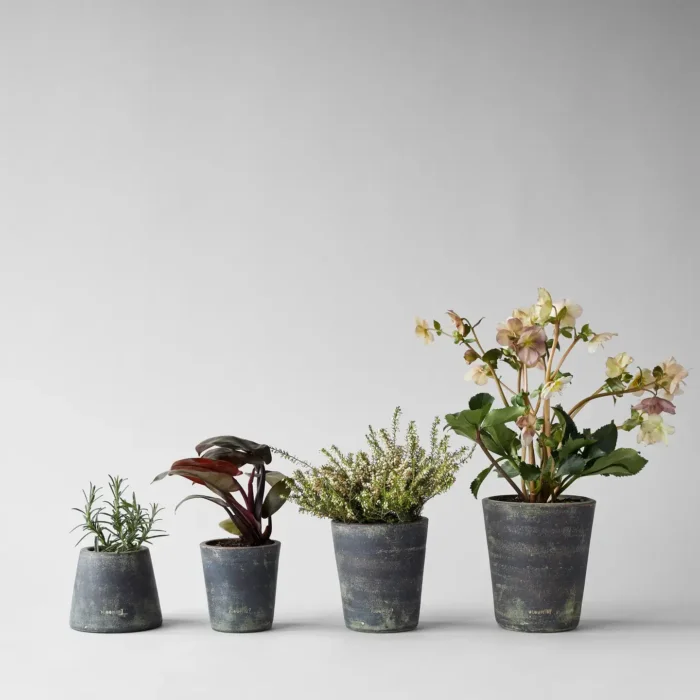
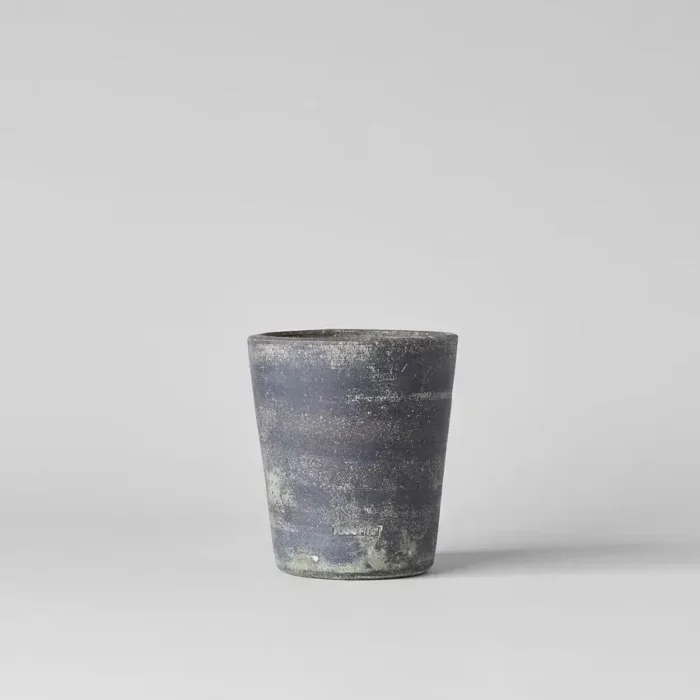
 Grey Patina Terracotta Planter, Handmade with a Mossy Weathered FinishPrice range: $120.00 through $145.00
 -
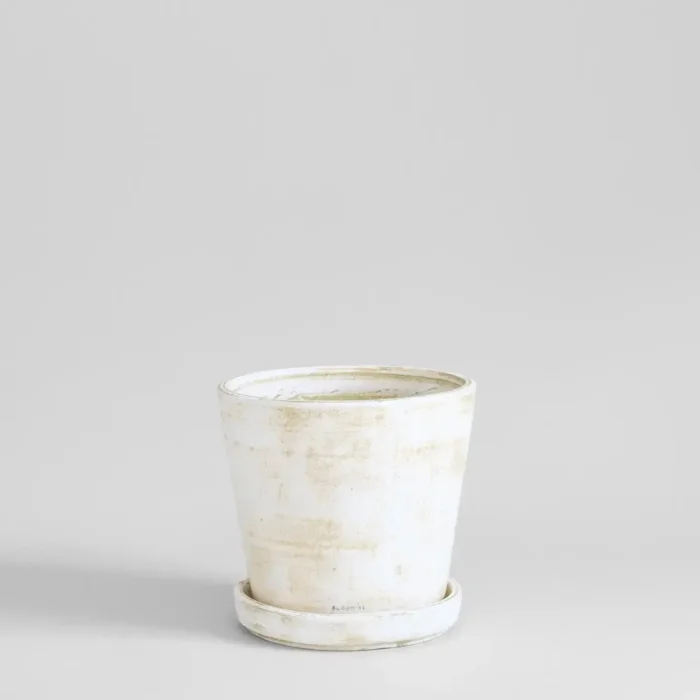
Hand-Thrown Terra Cotta Planter: Rustic White Patina FinishPrice range: $30.00 through $35.00
-
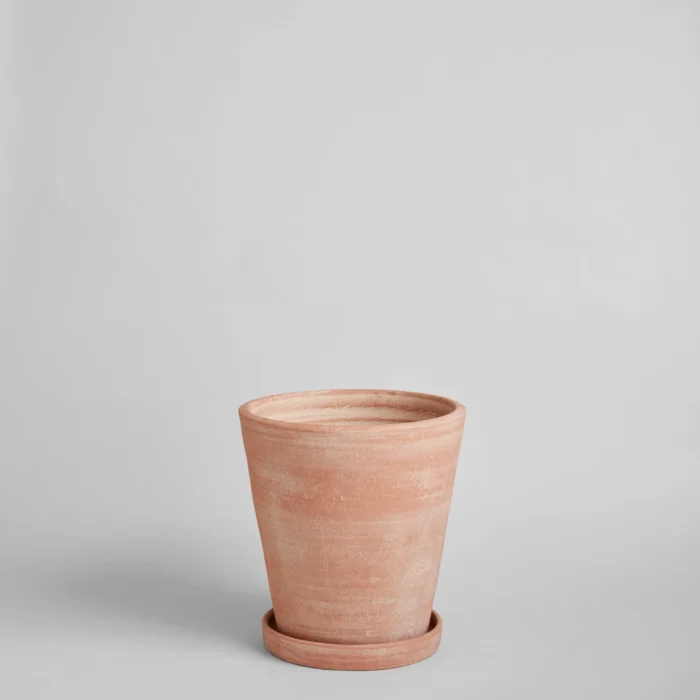
Handmade Terra Cotta Planters: Artisanal Studio Planter, Rustic Whitewash FinishPrice range: $40.00 through $90.00

3. Alocasia (Elephant’s Ear)
Species: Varies (Alocasia macrorrhiza, Alocasia cucullata, etc.).
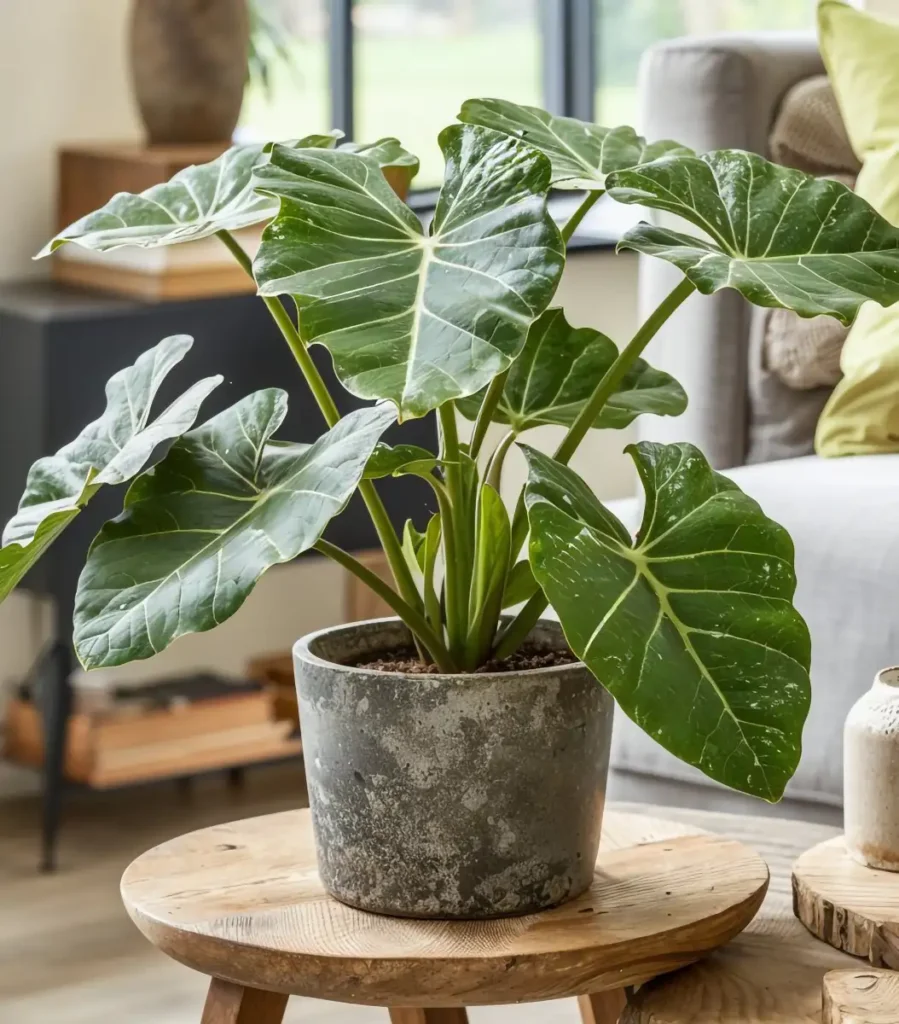
If you want a plant that instantly makes your space feel luxurious and high-end, Alocasia is that plant. With its oversized, sculptural leaves and striking vein patterns, it gives you that “designer home” look.
What Is Alocasia (Elephant’s Ear)?
Alocasia is a tropical plant known for its large, arrow- or heart-shaped leaves that resemble elephant ears. Popular varieties include:
- Alocasia macrorrhiza (giant, dramatic leaves)
- Alocasia cucullata (more compact and beginner-friendly)
- Alocasia x amazonica (dark green with bold white veins)
What makes Alocasia stand out:
- Architectural, statement-making foliage
- Glossy or velvety textures depending on variety
- High contrast veins for a striking visual effect
👉 This is a go-to plant for modern, bold interior styling.
Large, bold, elephant ear-shaped leaves in various shades of green, sometimes with contrasting veins or textured surfaces.
- Light: Bright, indirect light (avoid direct sun). Alocasia thrives in a well-lit bathroom with indirect sunlight from a window.
- Mature Size: Varies depending on species. Some Alocasia varieties grow to be compact (1-2 ft tall), while others can reach 6-8 ft in height.
- Difficulty: Easy to moderate. Requires moderate watering and humidity levels.
- Best Use Case: Shelf plant, accent piece due to its bold foliage.
Warning: Toxic to pets and children if ingested. Keep out of reach.
Special Tip: Allow the top inch of soil to dry slightly between waterings. Mist regularly, especially in dry climates, to maintain humidity.
Fun Fact: Alocasia leaves were traditionally used as umbrellas in Southeast Asia due to their large size and water-repellent surface.
Also Read >> Best Air-Purifying Houseplants for Bedrooms: Your Guide to Natural Sleep Sanctuaries (2024)
4. Philodendron
Species: Varies (Philodendron bipinnatum, Philodendron Hederaceum, etc.).
Varied foliage shapes and sizes depending on the species, some with trailing vines or climbing habits.
Some varieties like Philodendron Pink Princess boast unique color variegation.
- Light: Varies depending on species (mostly bright, indirect light). Some Philodendrons tolerate lower light conditions. Research the specific needs of your variety.
- Mature Size: Varies depending on species. Trailing varieties can reach several feet in length, while climbing varieties can grow up to 10 ft or more.
- Difficulty: Easy. Generally low-maintenance and adaptable.
- Best Use Case: Shelf plant, hanging basket for trailing varieties, climbing on a moss pole for climbing varieties.
- Special Tip: Choose a pot with good drainage and water when the top inch of soil feels dry. Misting occasionally is beneficial for some varieties.
Warning: Toxic to pets and children if ingested. Keep out of reach.
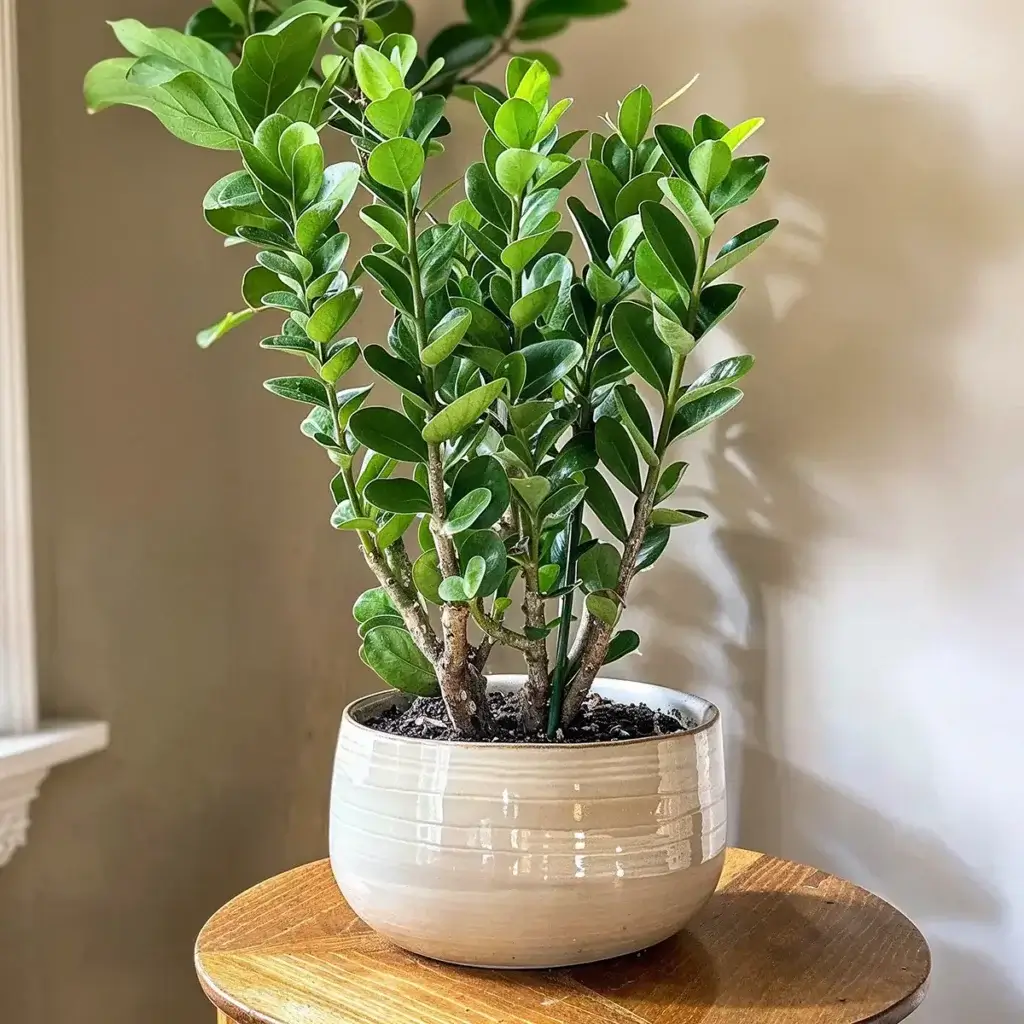
5. ZZ Plant (Zamioculcas zamiifolia)
Species: Zamioculcas zamiifolia. Glossy, dark green foliage with a unique architectural form. ZZ plant stands out for its low-maintenance needs and air-purifying properties.
If you’ve ever said, “I want plants, but I don’t want the stress,” the ZZ plant is exactly what you’re looking for. It’s one of the most forgiving houseplants out there—perfect for busy schedules, beginners, or even those “I forgot to water it…again” moments.
What Is a ZZ Plant?
Zamioculcas zamiifolia, commonly called the ZZ plant, is a tropical plant known for its:
- Thick, glossy dark green leaves
- Upright, sculptural growth
- Ability to thrive in low light and neglect
Fun fact:
It’s often called the “eternity plant” because it can survive conditions that would take out most other houseplants.
👉 This is one of the best low maintenance indoor plants you can own.
Fun Fact: ZZ Plant is nicknamed the “eternity plant” due to its tolerance for neglect and low light conditions.
- Light: Low light tolerant (adapts to various light conditions). Thrives in bright, indirect light but can survive in low-light corners.
- Mature Size: 2-4 ft tall.
- Difficulty: Easy. Extremely tolerant and requires minimal care.
- Best Use Case: Floor plant, low-light corner. Ideal for beginners or busy plant owners.
- Special Tip: Water sparingly and allow soil to dry completely between waterings. Overwatering is the main threat to ZZ plants.

6. Snake Plant (Sansevieria)
Upright, architectural leaves with interesting patterns and variations depending on the species. Some Snake Plants have variegated stripes or bands running along the stiff, sword-like leaves.
- Light: Bright, indirect light (tolerates low light). Snake Plants are known for their impressive tolerance of low-light conditions.
- Mature Size: Varies depending on species. Some Snake Plants grow to be as short as 8 inches tall, while others can reach up to 24 inches or more.
- Difficulty: Easy. Requires minimal care and is nearly indestructible.
- Best Use Case: Floor plant, desk plant. Ideal for beginners or for adding a touch of greenery to office spaces.
Warning: Mildly toxic to pets and children if ingested. Keep out of reach.
Special Tip: Prefers neglect and infrequent watering. Water only when the soil is completely dry to the touch. Avoid overwatering, which can cause root rot.
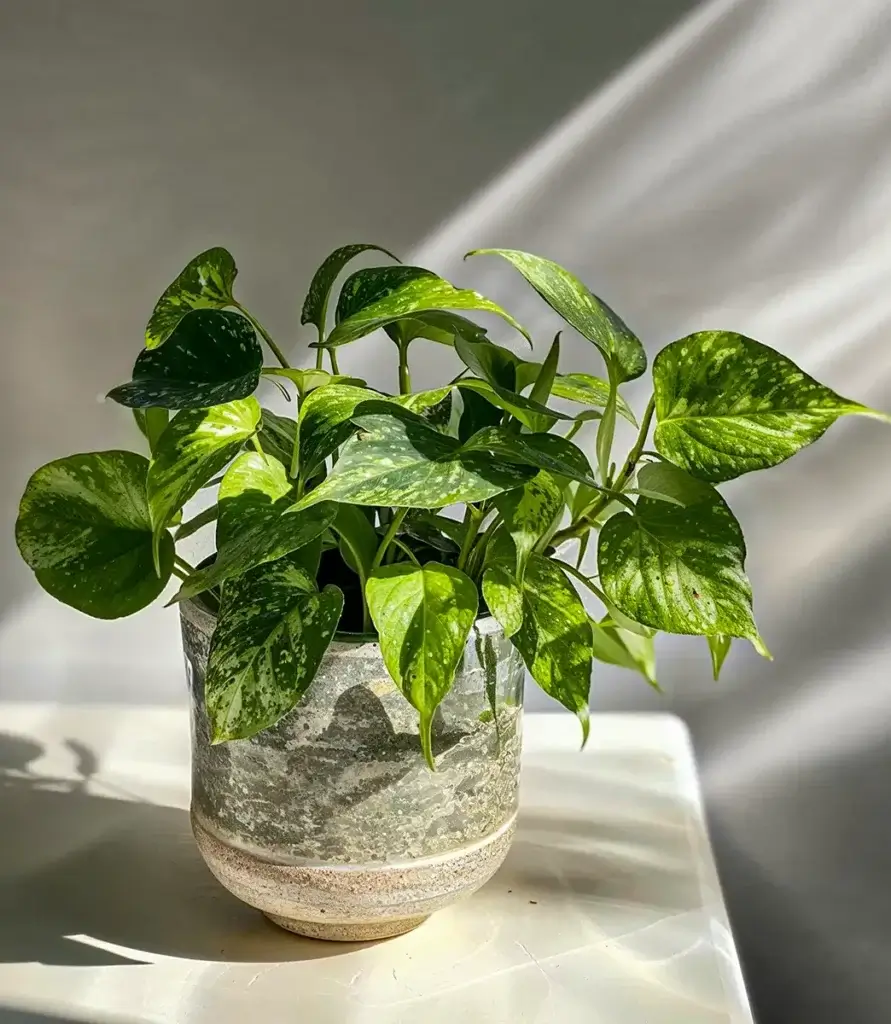
7. Pothos (Epipremnum aureum):
Lush, trailing vines with heart-shaped, glossy leaves that come in various shades of green, sometimes with variegations of white or cream.
- Light: Bright, indirect light (tolerates lower light levels). Pothos can adapt to a range of lighting conditions but thrives in brighter indirect light.
- Mature Size: Up to 10 ft long (trailing vine).
- Difficulty: Easy. Very forgiving plant that requires minimal care.
- Best Use Case: Hanging basket, shelf plant, climbing on a moss pole. Can also trail down from a table or desk.
Warning: Toxic to pets and children if ingested. Keep out of reach.
Special Tip: Easy to propagate in water. Allow the top inch of soil to dry before watering. Pothos can handle underwatering better than overwatering.

8. Bird of Paradise (Strelitzia):
Bird-like orange and blue flowers with unique boat-shaped petals, resembling a bird of paradise in flight.
- Light: Bright, indirect light with some direct sun. Bird of Paradise needs a good amount of light to flower but avoid harsh afternoon sun.
- Mature Size: 4-6 ft tall indoors.
- Difficulty: Moderate. Requires consistent watering, good drainage, and bright light for flowering.
- Best Use Case: Large floor plant in a sunny room with ample space.
Special Tip: Needs consistently moist soil but avoid overwatering. Provide high humidity levels, especially during flowering. Mist regularly or use a pebble tray filled with water.

9. Bromeliad
Species: Varies (Tillandsia, Aechmea, Vriesea, etc.). Vibrant and colorful central bracts (modified leaves) in various shades of red, green, purple, orange, and yellow, with interesting textures and patterns. The actual flowers are small and inconspicuous but often brightly colored as well.
- Light: Bright, indirect light. Avoid direct sunlight, which can scorch the bracts.
- Mature Size: 1-3 ft tall.
- Difficulty: Easy to moderate. Requires proper watering techniques and moderate humidity.
- Best Use Case: Tabletop plant, terrarium. Bromeliads add a touch of the tropics to any space.
Special Tip: Water by filling the central cup (funnel) and mist regularly to maintain humidity. Avoid overwatering, and allow the cup to dry completely between waterings. Bromeliads can also be grown mounted on driftwood or boards.
Fun Fact: Bromeliads are not parasites! They use other plants for support but get their nutrients from the air and water that collects in their central cup.

10. Anthurium
Heart-shaped, glossy leaves and long-lasting, waxy flowers (spathe) in vibrant shades of red, pink, white, or purple, often with a contrasting spadix (flower spike) in the center.
- Light: Bright, indirect light (avoid direct sun). Anthuriums prefer bright light but not direct sunlight which can scorch the flowers and leaves.
- Mature Size: 1-3 ft tall.
- Difficulty: Moderate. Requires consistent moisture, high humidity, and well-draining soil.
- Best Use Case: Tabletop plant, bathroom (loves humidity). Anthuriums add a touch of elegance and tropical flair to any space.
Warning: Mildly toxic to pets and children if ingested. Keep out of reach.
Special Tip: Maintain consistent moisture in the soil but avoid overwatering. Allow the top inch of soil to dry slightly between waterings. Mist regularly and consider using a pebble tray filled with water to increase humidity.

11. Peace Lily (Spathiphyllum)
Peace lilies boast attractive, white, hooded flowers (spathe) that resemble peace flags, surrounded by lush, dark green foliage.
- Light: Low light tolerant (prefers medium, indirect light). Peace lilies can thrive in brightly lit bathrooms or rooms with lower light levels.
- Mature Size: 1-3 ft tall.
- Difficulty: Easy. Relatively low-maintenance and forgiving of underwatering.
- Best Use Case: Living room plant, bathroom (loves humidity). Peace lilies are known for their air-purifying properties and ability to thrive in various lighting conditions.\
Ready to style your plants? Shop our handcrafted planter collection for pieces that blend beauty and function.
Warning: Mildly toxic to pets and children if ingested. Keep out of reach.
Special Tip: Flowers indicate watering needs – drooping flowers mean it’s time to water. Prefers moist soil but avoid overwatering. Allow the top inch of soil to dry slightly between waterings.
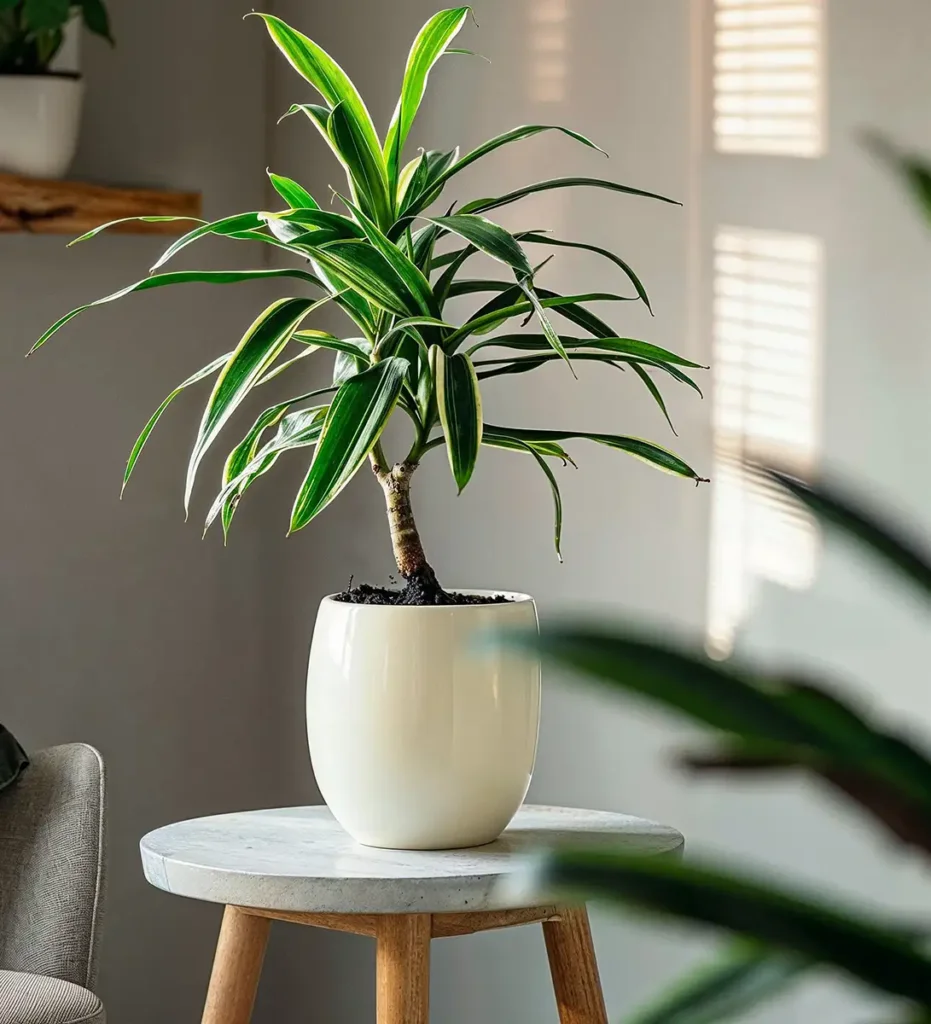
12. Dracaena
Upright, sword-shaped leaves with vibrant green or variegated colors depending on the species. Some Dracaena varieties like Dracaena Marginata (Marginata Corn Plant) have striking red margins on the leaves.
- Light: Bright, indirect light (tolerates some direct sun). Dracaena enjoys good lighting but can tolerate lower light conditions. Avoid harsh afternoon sun.
- Mature Size: Varies depending on species (3-8 ft tall).
- Difficulty: Easy. Generally low-maintenance and adaptable.
- Best Use Case: Floor plant, office plant. Dracaena’s air-purifying properties and attractive foliage make it a popular choice for indoor spaces.
Warning: Mildly toxic to pets and children if ingested. Keep out of reach.
Special Tip: Water when the top inch of soil feels dry. Provide well-draining soil to prevent root rot. Misting occasionally is beneficial, especially in dry climates.
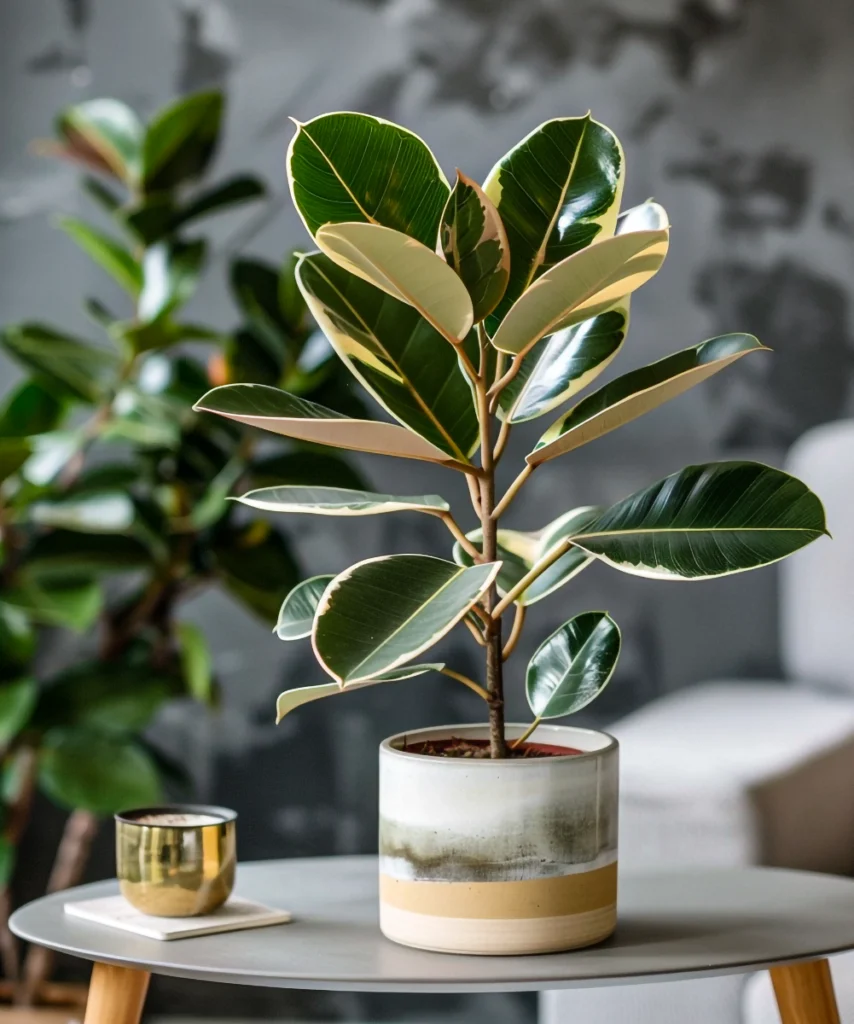
13. Ficus elastica (Rubber Tree)
Large, glossy, deep green leaves with a leathery texture. Rubber trees are known for their impressive size and air-purifying properties.
- Light: Bright, indirect light. Avoid direct sun, which can scorch leaves.
- Mature Size: Up to 10 ft tall indoors.
- Difficulty: Easy to moderate. Requires consistent watering and moderate humidity.
- Best Use Case: Large floor plant in a spacious room.
Warning: Mildly toxic to pets and children if ingested. Keep out of reach.
Special Tip: Provide consistent moisture but avoid overwatering. Wipe leaves occasionally with a damp cloth for better shine. Misting regularly can help maintain humidity.

14. Dieffenbachia (Dumb Cane):
Large, variegated leaves with bold patterns in shades of green, cream, and white, depending on the variety. Be aware that Dieffenbachia is toxic and can cause irritation if ingested.
- Light: Bright, indirect light (avoid direct sun). Dieffenbachia thrives in well-lit bathrooms or rooms with lower light levels.
- Mature Size: 3-6 ft tall.
- Difficulty: Easy to moderate. Requires moderate watering and humidity.
- Best Use Case: Living room plant, corner accent plant due to its bold foliage.
Warning: Toxic to pets and children if ingested. Wear gloves when handling and keep out of reach.
Special Tip: Water when the top inch of soil feels dry. Misting occasionally can help maintain humidity.

15. Schefflera (Umbrella Tree):
Lush, green leaves clustered at the ends of branches, resembling an umbrella canopy.
- Light: Bright, indirect light. Schefflera enjoys good lighting but can tolerate slightly lower light conditions. Avoid harsh afternoon sun.
- Mature Size: 6-8 ft tall.
- Difficulty: Easy. Generally low-maintenance and adaptable.
- Best Use Case: Floor plant, entryway plant. Schefflera’s attractive foliage and air-purifying properties make it a popular choice for indoor spaces.
Warning: Mildly toxic to pets and children if ingested. Keep out of reach.
Special Tip: Water when the top inch of soil feels dry. Prune regularly to maintain a bushy shape. Misting occasionally is beneficial, especially in dry climates.
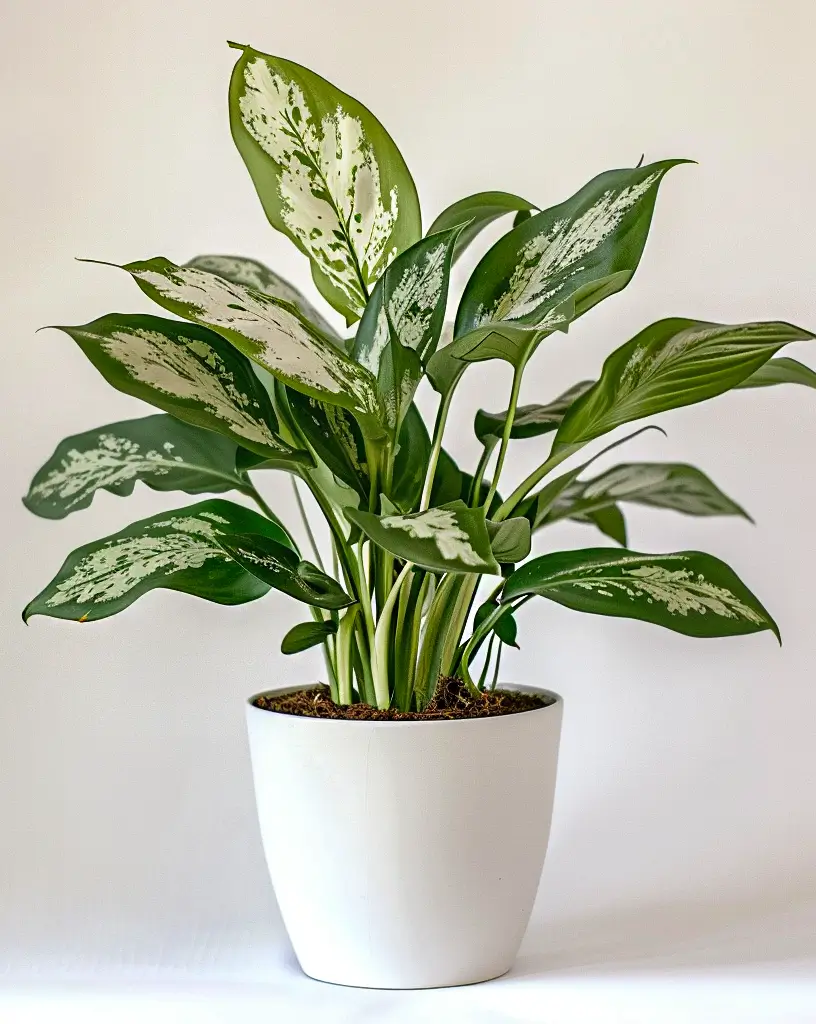
16. Chinese Evergreen (Aglaonema):
Elliptical or oval-shaped leaves with beautiful variegations of green, silver, and cream, depending on the variety. Chinese Evergreen adds a touch of elegance and color to any space.
- Light: Low light tolerant (prefers medium, indirect light). Thrives in brightly lit bathrooms or rooms with lower light levels.
- Mature Size: 1-2 ft tall.
- Difficulty: Easy. Very forgiving of underwatering and requires minimal care.
- Best Use Case: Shelf plant, bathroom (loves humidity).
Warning: Mildly toxic to pets and children if ingested. Keep out of reach.
Special Tip: Water moderately and allow the top inch of soil to dry slightly between waterings. Avoid overwatering. Misting occasionally can be beneficial.
17. Croton (Codiaeum variegatum):
Vibrant and colorful foliage with a stunning array of variegations in shades of green, yellow, orange, red, and purple. The unique leaf patterns and color combinations make Croton a truly eye-catching plant.
- Light: Bright, indirect light with some direct sun. Croton thrives in bright, indirect light but appreciates a few hours of morning sun for optimal color development. Avoid harsh afternoon sun.
- Mature Size: 3-6 ft tall indoors.
- Difficulty: Moderate. Requires consistent watering, moderate humidity, and proper fertilization to maintain vibrant foliage.
- Best Use Case: Floor plant, placed near a bright window with indirect sunlight.
Warning: Mildly toxic to pets and children if ingested. Keep out of reach.
Special Tip: Water when the top inch of soil feels dry. Mist regularly to maintain humidity and fertilize occasionally during the growing season (spring and summer) for best results.
Creative Ways to Display Tropical Indoor Plants
- Hanging planters: Liven up your space and save floor space with hanging planters made of macrame or decorative hooks.
- Wall-mounted planters: Create a living wall with mounted planters and transform your space into a lush indoor jungle.
- Terrariums: Enclosed terrariums showcase miniature tropical ecosystems and add a touch of whimsy to your home.
- Plant stands: Use plant stands of varying heights to create a multi-level display and allow each plant to thrive.
- Plant groupings: Group plants with similar requirements together to create a visually appealing mini-habitat and boost humidity.
Remember: Consider the light and space requirements of each plant when choosing a display method. Experiment and find what works best in your home.
Rare and Unique Tropical Indoor Plants
For the adventurous plant enthusiast, here are a few conversation-starting, unique tropical plants:
- Variegated Monstera deliciosa: This stunning Monstera features variegated leaves with white and green patterns, adding a touch of elegance to your space. (Note:** Toxic to pets and children)
- Anthurium clarinervium: Boasting heart-shaped leaves with prominent veins, this Anthurium is a true showstopper. It thrives in bright, indirect light and adds a vibrant pop of color to your indoor garden.
- Pink Princess Philodendron: This trendy Philodendron features striking pink and green foliage, making it a favorite among plant collectors. It requires bright, indirect light and adds a touch of whimsy to any room.
- Staghorn Fern (Platycerium): This unique fern has spectacular fronds resembling a stag’s antlers. It can be mounted on a wall or placed in a hanging basket for a dramatic display.
- Rhipsalis baccifera (Mistletoe Cactus): This low-maintenance cactus has trailing stems with tiny white flowers. It’s a charming addition to your indoor jungle and thrives in moderate, indirect light.
- Remember: Rare and unique tropical plants may require more specific care than common varieties. Research their individual needs before bringing them home.
With proper care and attention to their specific needs, tropical indoor plants can thrive and beautify your home for years to come.
Start with easy-to-grow varieties like ZZ plants or pothos, and gradually experiment with more unique and challenging options as you gain confidence. The rewards of a flourishing indoor jungle are well worth the effort!
Plant Profile Notes:
- Consider adding a brief note about toxicity for pets and children, especially for plants like dieffenbachia and monstera. This can be incorporated into the individual plant descriptions or as a general advisory at the end.
Easiest Tropical Houseplants
- ZZ Plant (Zamioculcas zamiifolia): Thrives in low light, tolerates infrequent watering, and is generally pest and disease resistant.
- Snake Plant (Sansevieria): Prefers neglect and infrequent watering, tolerates low light conditions, and is nearly indestructible.
- Pothos (Epipremnum aureum): Easy to propagate, tolerates lower light levels, and requires watering only when the top inch of soil feels dry.
- Peace Lily (Spathiphyllum): Low light tolerant, easy to care for, and even indicates its watering needs through its flowers (drooping when thirsty).